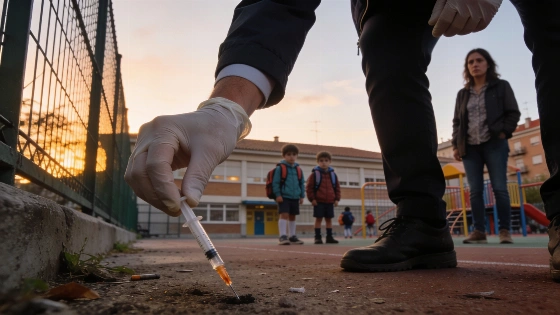
Children at two Madrid schools return to class surrounded by drug users and discarded syringes. Despite police action and repeated complaints, the problem persists. Parents and teachers warn of daily risks and demand stronger measures.
Each morning at República de Chile and Nazaret schools in Madrid’s San Blas district, staff check the playgrounds for syringes and drug debris before letting students in. This is not a precaution—children have found used needles on school grounds, and some have picked them up with their bare hands. Drug users gather just meters from the classrooms, and public drug use has become a routine sight for hundreds of students.
Arancha Mitjavila, director of República de Chile, says the situation has become unbearable. Years of complaints and police action have not solved the problem, only moved it around. After police broke up a large encampment in Parque Paraíso, its former residents spread out into other parts of the park and nearby streets. From the school windows, children see people injecting drugs, cutting hair, and living in public view—scenes that have changed how they see their own neighborhood.
In early May 2026, a murder occurred in Parque Paraíso, drawing renewed attention to the persistent insecurity in the San Blas district.
Many parents feel powerless. Some children walk to school with only older siblings, as parents leave early for work. Sergio, a local father, says his nine-year-old son already asks about "those strange people" he sees every morning. At Nazaret, a mother remembers a child drawing pictures in class of people using drugs. Several families say drug litter is a constant risk on school property.
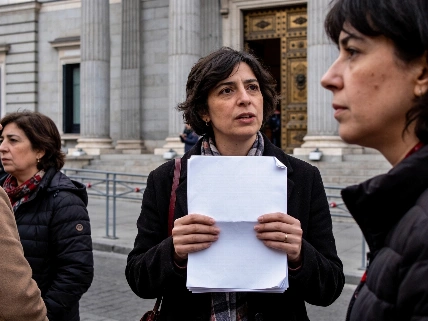
Officials say they are responding. Madrid Salud teams visit daily, and the city council says police are present and working with national forces. The district’s councillor, Almudena Maíllo, has promised more funding for addiction services soon. But parents and teachers say these steps are not enough. Community groups, including the Simancas-Parque Paraíso platform, have held six protests in two years and brought their concerns to the Madrid Assembly, but the main problem remains.
Political disagreements have stalled a coordinated response. The PSOE and Más Madrid want a working group with the city, regional, and national governments, arguing that police alone cannot solve the deeper issues of drug trafficking, narcopisos, and social neglect. According to the Government Delegation, both the city and the region have refused to join such a group, leaving families stuck between bureaucracy and daily risk.
According to a September 2026 report by Vozpópuli, the problem in Parque Paraíso is not limited to visible drug use: users are often seen relieving themselves in public, sometimes near children playing in the park. This ongoing proximity between drug users and local families has intensified concerns about safety and public health in the area.
San Blas’s problems go back decades. The area once housed Los Módulos, a prefabricated housing project that became one of Europe’s main drug markets in the 1980s. The effects of marginalization and poor urban planning are still felt today. While other Spanish regions have faced school crises, the open drug use around Madrid’s classrooms makes San Blas stand out for both scale and urgency.
On Avenida de Arcentales near Simancas metro, syringes, burnt spoons, and other drug debris are common on the sidewalks. Residents say the district never fully recovered from the 1980s. The arrival of fentanyl has made things worse, with teachers and social workers now seeing users whose condition points to this powerful synthetic opioid. For children, the impact is immediate—exposure to addiction, neglect, and public disorder shapes their sense of safety and normal life.
Madrid’s authorities face a clear choice: address the deep social and health crisis with real, coordinated action, or risk letting another generation grow up surrounded by problems that should never be part of childhood.