Madrid now requires official residency for its youth transport pass. Foreign and out-of-region students face costs nearly triple the local rate. The change disrupts academic life and sparks political backlash.
Madrid’s new transport rule has caught thousands of students off guard. Anyone who isn’t officially registered as a Madrid resident is now barred from getting the city’s €10 Abono Joven travel card, leaving them to pay almost three times as much for daily commutes. The policy, introduced in June, has left many scrambling for alternatives and drawn criticism for being both unfair and confusing.
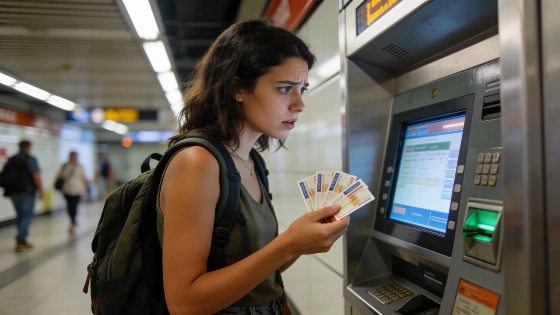
Isabella Bogaty, a 21-year-old student from Puerto Rico, felt the impact right away. She arrived in Madrid for a year of study, only to find out she couldn’t get the discounted youth pass because her student housing doesn’t allow official registration. In just 20 days, she spent €29.20 on standard ten-trip tickets—nearly triple what she would have paid with the Abono Joven. She’s not alone.
According to official bulletins, the new rule applies not only to foreign students but also to Spaniards from other autonomous communities who study or work in Madrid without changing their official registration.
The rule, published by the Comunidad de Madrid on June 12, now ties the Personal Public Transport Card to official residency in the region. This affects not just international students, but also Spaniards from other regions who keep their registration in their home provinces, as well as workers who commute from outside Madrid. Those who already had the card before the change can keep it for now, but if they need a replacement, they’ll have to meet the new residency requirement.
Students like Mats Verhulst, a 20-year-old Belgian on a five-month Erasmus exchange, were turned away from the youth pass on their first day. Short-term students have no way or reason to register as residents, so they’re left paying much higher fares. Organizations that run study-abroad programs have also been hit, forced to buy more expensive tourist and multi-trip tickets. Brissette Garcia, who manages transport for incoming American students, says costs jumped from hundreds to thousands of euros this summer, and confusion grew as different transport offices gave conflicting instructions.
The Abono Joven, for anyone aged 15 to 25, offers unlimited travel across all fare zones for €10 a month. The new residency rule has now shut out a large part of the student population. Even those with valid foreigner identification numbers (NIE) are blocked if their accommodation doesn’t allow official registration. For many, registering isn’t legally required for their stay, but it’s now a barrier to affordable transport.
Spanish media report that cards issued before mid-June 2026 remain valid, but all new applicants must now provide proof of official registration (empadronamiento). Attempts to negotiate mutual recognition or special conditions for students from other regions, such as Galicia, have so far failed to produce any agreement.
Madrid’s Regional Transport Consortium says the policy is about fairness: only registered residents should get subsidies paid for by the region. Officials claim the change was announced with enough time for newcomers to register before the academic year. They also mention plans for agreements with other Spanish regions to let their students access the pass without Madrid registration, but nearly three months later, no such deals have been made.
The backlash has been strong. The PSOE’s Javier Guardiola calls the rule a form of “national priority” that shuts out people who come to Madrid to study or work. María Acín of Más Madrid calls it both an attack on public transport and discriminatory, especially against migrants and non-local students. She accuses the regional government of quietly imposing the rule and wants it reversed, arguing it only makes life harder and more expensive for hundreds of thousands.
For newcomers like Óscar González, a 33-year-old Mexican master’s student at the Universidad Politécnica de Madrid, the consequences are immediate. He and his wife can’t get a residency appointment for at least a month, so they now face at least €120 in weekday transport costs each month, plus extra for weekends. The financial hit is sudden and unavoidable.
This shake-up in Madrid’s transport system comes as other Spanish regions also struggle with infrastructure and service problems, like the recent breakdown of Catalonia’s Rodalies network. When local authorities put administrative rules ahead of practical needs, it’s students, workers, and newcomers who end up paying more. Madrid’s insistence on residency as the key to affordable travel is less about saving money and more about drawing lines between locals and outsiders. The result: a city that welcomes new arrivals at the airport, but hits them with extra costs at the metro turnstile.