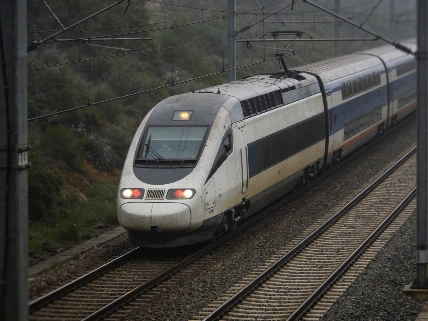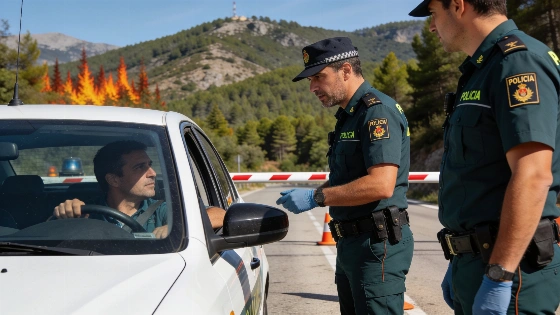
Madrid’s Government Delegation formally asked the regional administration to impose exceptional access restrictions at Sierra de Guadarrama National Park and Cuenca Alta del Manzanares Regional Park during the total solar eclipse on August 12, 2026. The request cited forecasts of very high wildfire risk and around 500,000 journeys across the region that day. Officials were focused on crowding and fire hazards in protected natural areas.
Under the coordination plan finalized ahead of the eclipse, the proposed controls would limit vehicle and pedestrian access outside officially designated observation points. The Guardia Civil recommended restricting car traffic on public forest roads, with measures planned from at least 16:00 to 22:00. Residents and workers in the municipalities would retain access. Visitors could face controls like those used on busy winter weekends, including closures when parking lots at Cotos and Navacerrada reached capacity.
The plan called for 1,700 officers from the Policía Nacional and Guardia Civil, with support from local police, Civil Protection volunteers and emergency services. The Guardia Civil was assigned most of the security operation because most observation points fall within its jurisdiction. The Policía Nacional was to focus on the metropolitan area and larger towns such as Alcalá de Henares and San Sebastián de los Reyes. In total, 66 municipalities had notified the Interior Ministry of official observation points, while 93 lay within the eclipse’s path of totality.
Francisco Martín, the Government Delegate in Madrid, stressed the scale of the operation and the need for coordinated action to prevent incidents. He urged the public not to park outside authorized areas, stop on road shoulders or block evacuation routes. Martín also reminded residents that certified eclipse glasses are required for viewing but must not be worn while driving. The priority, he said, was to avoid risky behavior in the countryside and use official observation sites.
The request for urgent action went to Miguel Ángel García, the regional minister for Presidency, Justice and Local Administration. It urged the Madrid government to use its powers to address the “very high” fire risk and expected influx of visitors. The aim was to protect natural spaces and reduce fire hazards, while supporting emergency and security services. Representatives from the Unidad Militar de Emergencias, the Directorate General of Traffic, the State Meteorological Agency, Renfe Cercanías, Adif, Summa 112 and the Madrid Regional Transport Consortium attended the coordination meeting.
Municipal reports after the eclipse described the crowds at outdoor observation sites. Rivamadrid, Rivas-Vaciamadrid’s municipal environmental service, said it kept special watch at elevated areas on August 12, where hundreds of people gathered to view the eclipse. The service also reported more than 200 wildfire-prevention interventions over the summer. Its account shows why officials emphasized monitoring and access management beyond the principal mountain parks.
Visitor management in the Sierra de Guadarrama has also become part of longer-term astronomy tourism planning. A programme involving Becerril de la Sierra, El Boalo-Cerceda-Mataelpino, Guadalix de la Sierra, Manzanares el Real and Soto del Real promotes guided visits that are environmentally responsible. Linked to Order 931/2026 of the regional Department of Culture, Tourism and Sport, it sets a limit of 30 places per day, another example of capacity management in the same mountain area.
Preparations elsewhere in Spain also addressed crowd safety and eye protection. In Catalonia, the Mossos d’Esquadra planned to deploy 700 officers for the eclipse, while the regional government planned to distribute 150,000 free eclipse glasses. Traffic authorities urged motorists to avoid the AP-7 and not watch the phenomenon from active roads.
The August event formed part of Spain’s wider 2026-2028 “Trio of Eclipses” programme. Order CNU/1093/2026, dated October 8 and published in the Boletín Oficial del Estado on October 17, established an inter-administrative body to implement the support programme for two total solar eclipses and one annular eclipse visible from different parts of Spain.
Recent events have highlighted the dangers wildfires pose in Spain’s natural areas. For example, a recent wildfire in Huelva forced the evacuation of two villages, underscoring the need for preventive measures during periods of high risk and heavy travel.
Solar eclipses draw large crowds to scenic locations, putting pressure on local infrastructure and emergency services. In Spain, summer heat and dry conditions, combined with high visitor numbers, can quickly create critical situations without proactive management. The proposed measures for August 12 reflected the need for coordinated action to protect people and the environment.