Catalan authorities prepare new concessions to expand metro and tram networks. Catalonia's authorities are discussing the second phase of a major PPP programme, planning metro and tramway expansion in Barcelona and Tarragona. The move comes in response to budget shortages and rising construction costs.
The Catalan authorities have begun preparing a second large-scale package of infrastructure projects, which involves attracting private companies to expand the metro and tram lines in the region. According to the department headed by Sílvia Paneque, the programs will total up to 1.5 billion euros. Priorities include the second phase of the tram system in Tarragona, extending Barcelona’s tram network to the north and south, as well as new metro sections in the Catalan capital.
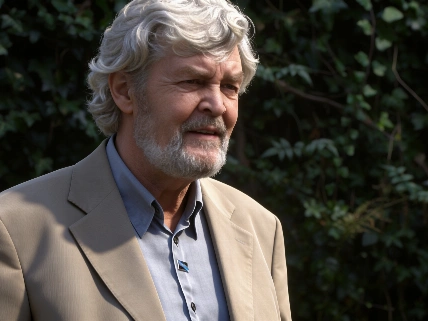
Plans to launch new concessions were announced by Catalonia’s president, Salvador Illa, at a Cercle d’Economia meeting. The overall program consists of two phases with a total investment of 3.3 billion euros. The first stage, worth 1.8 billion euros, has already been submitted for preliminary discussion and includes nine stations on the L9 metro line, several road projects, and a network of charging stations for electric vehicles. According to the relevant department, around 70 companies have expressed interest in these projects.
The second phase, currently under discussion, aims to accelerate the implementation of delayed transport projects. Among them are the continuation of the tramline towards Molins de Rei and Badalona, as well as new stops in the Tres Xemeneies area, where Catalunya Media City is planned. There is also consideration of building new metro sections: extending line 1 to Badalona, line 3 to the future Clínic campus in Esplugues, and line 4 to Sagrera. Authorities are studying the option of a concession solution for the interchange hub at Espanya square, which is becoming increasingly in demand due to disruptions on Renfe and the growth of intercity bus services.
In the road sector, the priority remains the reconstruction of the C-16 between Berga and Bagà (€470 million), which will be put out to tender by Abertis. There is also discussion about expanding the C-55 in Manresa, though a final decision on this project has not yet been made. Authorities emphasize that the acceleration of new project launches is linked not only to accumulated delays but also to the continuous rise in construction material prices, which increases the cost of works.
According to the plan, private companies will be responsible not only for construction but also for subsequent maintenance and upgrades of the infrastructure. To minimize the budget burden and avoid an increase in official debt, the Generalitat is implementing an 'availability payment' scheme: the government pays the contractor a fixed annual amount for roughly 35 years, based on the quality and availability of the facility, without introducing user tolls.
A similar scheme was previously used in Catalonia—so-called 'shadow concessions' enabled the construction of facilities such as the Ciutat de la Justícia and several police stations. However, after changes in the European accounting system, these obligations started being classified as public debt, which sparked debate and criticism during the financial crisis. According to an audit by the government of Artur Mas, by 2015 the volume of such obligations had reached nearly €31 billion.
Funding infrastructure and new approaches to public-private partnerships are becoming increasingly relevant amid rising costs and limited budget capacity. Similar challenges are being discussed in other regions of Spain: for example, authorities in Valencia recently allocated €180 million to modernize schools and combat heat, a move that sparked debate among unions and residents (more about the decision in Valencia).
For reference: The Barcelona Metro is the largest metro system in Spain after Madrid, with over 190 stations. Tram lines have been actively expanding since the 2000s, and projects for further extension are regularly discussed at the Catalan government level. In recent years, the region has faced a shortage of funding for major infrastructure projects, which has forced the search for new investment schemes.