Temporada Alta's 35th edition runs from 3 October to 8 December, with 91 shows in Girona, Salt and other municipalities. Early demand has already added performances to 12 productions as the festival expands its international programme without loosening its ties to Girona.
From 3 October to 8 December, audiences in Girona and Salt will see 91 shows over ten weeks. The programme includes 16 international productions and extends to other municipalities in the province. Early sales have already forced extra performances. The festival's central task is keeping its direct relationship with Girona.
Several productions have sold out. Extra performances have been added to 12 shows. RTVE and El País reported the early demand. The programme includes Needcompany, Peeping Tom, Romeo Castellucci, Guy Cassiers and Larbi Cherkaoui.
The 2026 programme includes 22 world premieres, 21 co-productions and artists from 11 countries, according to the festival announcements.
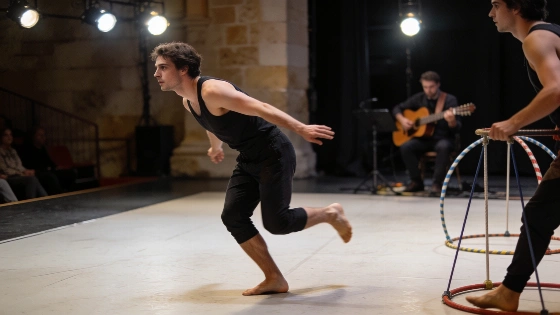
The official opening follows the Saturday prologue of Dysphoria by María Goiricelaya and Histrión Teatro. The first major international performance is Has been at the Teatro Municipal de Girona. Cherkaoui and Martin Zimmermann created the work around ageing and the fear of losing artistic relevance.
Has been has no spoken text. Dance, circus, theatre and live music share the stage. Narcís Puig describes it as a tragicomedy with humour and tenderness. La Vanguardia and ARA identify ageing and the fear of losing artistic relevance as its main concerns.
Puig does not see the festival as needing a high-pressure inauguration. For him, the event begins with the first performance and the audience. He does not want a ceremonial moment built to attract political or civic attention. He recognises the differences with Barcelona's Grec festival, but says the two organisations remain close.
The 2026 programme also includes Grans Bardisses, a new work by Llatzer Garcia, and another edition of the Torneo de Dramaturgia Catalana.
The figures show how far Temporada Alta has come. Since its launch, the festival has presented 2,253 shows and welcomed 1,302,620 spectators. Puig credits that record above all to the trust built with Girona. The festival began in 1992 with four shows. It grew step by step without breaking the link between its programme and its audience.
Girona remains central.
Growth beyond Barcelona is one of the festival's defining features. Puig calls Temporada Alta a positive anomaly in a cultural system that often concentrates major events in the Catalan capital. Girona offers a smaller setting where artists and audiences can meet more directly. The festival has become part of the city's daily rhythm. Puig believes its ideal size is close to one hundred shows.
The organisation has avoided abrupt changes in leadership or identity. Salvador Sunyer directed Temporada Alta for 33 years. He remains involved through the Fundació Ciutat Invisible. Puig has worked at the festival for 17 years. He spent years as Sunyer's deputy, travelling to international performances. The current transition has been deliberately continuous.
That continuity appears in the programme. Cassiers and Christiane Jatahy return to a festival that has followed artists over time, as Peter Brook did earlier. Puig also points to Cherkaoui, Castellucci's Fausto, Tolcachir's The forest with Cristiana Morganti, Peeping Tom's revised Le salón and the new phase of Needcompany after Jan Lauwers.
The local selection adds La forma humana by Pablo Messiez, Mal Pelo's new family production about Bach, Blai Mateu's LAB: a la recerca de ‘qui soc?’ with his father Tortell Poltrona, Verborrea with Javier Cámara and Massacre by Agnes Mateus. An earlier Catalan report focused on rain alerts in the region. Temporada Alta's story is different. Its regional reach comes through theatre and the audience built around it.
The record points to a festival that expanded without abandoning its base. Its international programme grew as artists changed, and the festival followed that movement from text theatre and contemporary dance toward political theatre, documentary work and hybrid forms.
The model held.
Temporada Alta's strongest asset is not the size of its 35th edition. It is the method behind it: gradual growth, a stable audience and Girona at the centre. The festival did not become important by imitating Barcelona. It built its own cultural presence elsewhere.