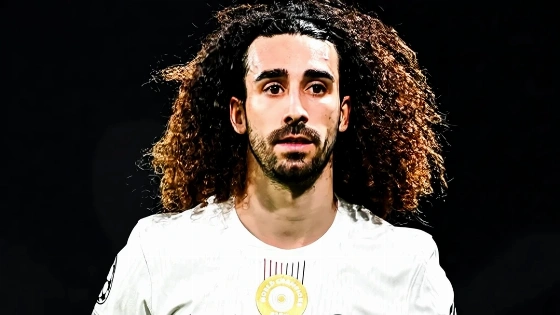
Cucurella under spotlight after admitting to son's therapy during World Cup. Marc Cucurella is making headlines not only because of his move to Real Madrid. His candid confession about seeking therapy for his autistic son during the World Cup has sparked a wave of support and raised new questions about the footballer's family.
There is renewed discussion around Marc Cucurella—not only because of his high-profile transfer to Real Madrid, but also due to a personal story the footballer decided to share ahead of the World Cup. The defender, who has long been a prominent figure in Spanish football, unexpectedly found himself in the spotlight after making a candid revelation about his family and a special decision concerning his eldest son.
As noted by Divinity, Cucurella, for the first time in a long while, allowed himself to step outside his usual reserve and shared that his six-year-old son Mateo, who has autism, will undergo special therapy in Miami during the World Cup. This step was not a coincidence: according to Marc, the family had planned the trip to the US for treatment long before, and the overlap with the World Cup became a convenient opportunity to combine something important for his son with the father's professional commitments.
A family decision amid big football
While footballing Spain discusses the return of José Mourinho and Florentino Pérez's election victory, significant changes are taking place in Cucurella's personal life. His family has already settled in Miami, where they will stay throughout the global football campaign. According to the defender, this is where Mateo will be able to complete an eight-week therapy course, while his parents will support their son and not miss the national team's important matches.
In an interview with 'El Partidazo' on Cadena COPE, Cucurella admitted that he is not used to sharing personal matters, but this time made an exception. He noted that caring for his family and his son's health is more important to him than any career concerns, and that Mateo rarely attends his father's matches due to his sensitivity to noise and crowds. Even at Stamford Bridge, the boy prefers spending time in a separate box with an iPad, where he can watch movies and YouTube—something he is usually not allowed to do.
The fine line between publicity and privacy
Cucurella's candor sparked a wave of support in the Spanish media and among fans. The footballer does not hide that discussing his family's struggles is difficult, as many tend to idealize the lives of celebrities. However, he says it was this openness that helped him receive understanding and support, as well as draw attention to an issue that thousands of families face.
In conversation with the journalist, Cucurella stressed that Mateo struggles in the heat and prefers cool temperatures, a swimming pool, and air conditioning. Therefore, if all goes well, the boy will appear at the stadium only for the final—if his health allows. This family approach to privacy and caring for the child has been a topic of discussion not only among fans but also within the professional community.
Media impact and public reaction
The story of Cucurella and his family once again reminds us that behind high-profile transfers and sporting successes lie personal dramas and daily work on oneself. The decision to combine participation in the World Cup with important therapy for his son became not only a reason for sympathy but also an example of how football stars use their public profile to support and draw attention to important issues.
According to Divinity, Cucurella and his wife Claudia Rodriguez are pleased with how their openness has been received by the public. For many fans and families facing similar challenges, this gesture was a sign of support and a reminder that there is room for real human stories even in the world of big football.