Marc Giró appears on La 2 for the last episode of 'Me meto en un jardín'. The interview was recorded before his switch to Atresmedia. The show closes its first season amid uncertainty about renewal.
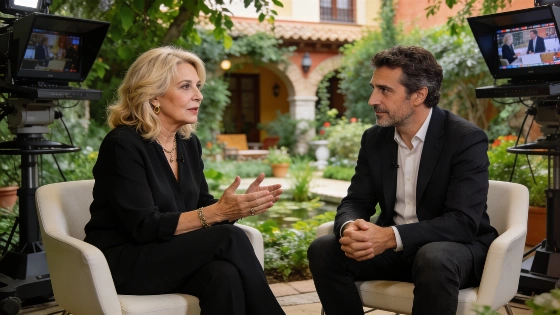
Marc Giró will be back on Spanish public television this Sunday, but only briefly and under unusual circumstances. La 2 will broadcast his interview with Mercedes Milá as the tenth and final episode of 'Me meto en un jardín', closing the program’s first season. The episode was filmed before Giró left TVE for Atresmedia, where he now leads 'Cara al show' on La Sexta. The timing is striking: as La 2 airs his interview, Atresmedia is already promoting the new season of his current show, creating a rare overlap between networks and giving unexpected visibility to a rival channel’s presenter.
Giró’s conversation with Milá, recorded before his career move, now serves as both a season finale and an inadvertent promotion for his new role. During the interview, Giró reflects on the reality of television audiences, noting that being recognized on the street reassures him that viewers are real, not just numbers. He also compares his work to that of a shop assistant, emphasizing his comfort with public interaction. Milá responds with her trademark humor, calling him a “puppy” at 50, a comment Giró welcomes with enthusiasm.
The first season of 'Me meto en un jardín' was conceived as a ten-episode experiment, with Milá interviewing a diverse range of guests in unique gardens, arriving by caravan as part of the show’s format. Despite frequent schedule changes on Sundays due to World Cup broadcasts, which disrupted the show’s regular slot, the program managed to secure strong ratings for La 2. Early episodes often exceeded a 4% audience share and drew over 500,000 viewers, making it one of the channel’s most-watched offerings on those nights. The strategy of pairing new episodes with reruns helped establish a consistent Sunday night identity for La 2.
Audience figures for the season reflect this stability: David Ucles (4.6%, 505,000 viewers), Sor Lucía Caram (4.7%, 506,000), Miguel Ángel Revilla (4.5%, 482,000), Álex Txikon (4.1%, 443,000), Óscar Camps (3.1%, 328,000), Toño Pérez (3.6%, 340,000), Nazareth Castellanos (3.3%, 297,000), Almudena Ariza (3.3%, 290,000), and Lucía Dominguín (4.2%, 359,000). These numbers are notable given the program’s irregular scheduling and the competitive Sunday night landscape.
As the season ends, the future of 'Me meto en un jardín' remains uncertain. RTVE has not yet announced whether the show will return for a second season, despite its positive reception and alignment with La 2’s cultural and public service mission. The format’s simplicity—Milá’s candid interviews in distinctive gardens—has proven effective, offering a recognizable and stable option for viewers. The lack of official news leaves the program’s renewal in question, but its performance suggests it could continue to play a key role in La 2’s Sunday lineup.
Before any decision on renewal is made, Milá will close the season with Giró, one of the most high-profile guests of the year. His appearance comes at a time of notable movement between Spanish TV networks, echoing other recent shifts such as the transfer of 'El Chiringuito' and Josep Pedrerol to Mediaset, as reported in recent coverage of major Spanish media changes. For now, 'Me meto en un jardín' ends its first run with a symbolic episode, leaving both its audience and the channel awaiting news on its future.
For context, 'Me meto en un jardín' has contributed to La 2’s efforts to maintain a distinctive identity within Spain’s competitive television market. The show’s focus on in-depth, unfiltered conversations in visually appealing settings fits the channel’s tradition of cultural programming. As Spanish public broadcasters continue to adapt to shifting viewer habits and increased competition from private networks, the fate of such formats may influence the broader direction of national television in the coming years.