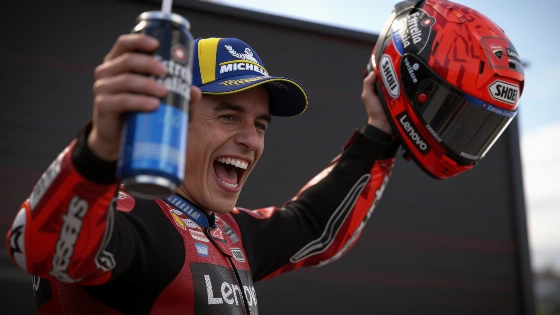
Marc Márquez, one of Spain’s most successful MotoGP riders, has always chosen to pay his taxes in Spain. He believes those who earn more should contribute more, even if it means having less wealth than he could by moving abroad.
Marc Márquez has never hidden his approach to money or his sense of responsibility. Despite being one of the highest-paid athletes in MotoGP, the Ducati rider has consistently chosen to pay his taxes in Spain, even as many of his peers opt for more favorable tax regimes in places like Andorra or Monaco. For Márquez, the decision is rooted in principle rather than convenience.
"I had a house in Andorra for almost four years, but I never really lived there and never paid taxes there," Márquez told La Gazzeta dello Sport. "Cervera is just an hour away by car, so in practice, I only kept my skis there." His choice stands out in a sport where relocating for tax reasons is common, especially among top earners.
Márquez is candid about the financial impact of his decision. "By always living in Spain, I have half of what I could have," he admits. "But I’ve always asked myself: if I had double, would my life change? The answer was no. If I had double in the bank, would my lifestyle change? Again, no." For him, the value lies not in accumulating more, but in living according to his own sense of fairness.
He goes further: "I believe there is a sense of justice, a civic sense: those who have more should pay more. With some limits, of course…" This perspective is rare in elite sports, where financial optimization often takes precedence over social contribution.
Looking Ahead
Fresh off a new contract with Ducati, Márquez’s earnings are set to rise, but his ambitions go beyond money or even victories. He says his real goal is to decide for himself when to step away from racing. "I hope to retire from racing enjoying it until the end and without suffering," he says. The challenge, he notes, is not just physical pain but the frustration that comes when results no longer match expectations—a sentiment echoed by many champions at the end of their careers.
"I’ve shown I can win; I wouldn’t stay if my place was in the middle of the grid," Márquez adds. His focus has shifted from chasing records set by legends like Agostini or Rossi to finding satisfaction in his own journey. "After everything I went through between 2020 and 2023, just being here is a gift. That’s why it no longer makes sense to obsess over records. Now, seeing my name alongside Ago and Valentino in the record books is an honor and a gift."
He reflects on a turning point: "Having one more title or one less won’t change my life. I found peace with myself last year in Motegi, when I proved to myself I could still win. I didn’t want to end my career with the consequences of my 2020 mistake, when I tried to come back too soon. I won again, and now I’m fine."
Context and Perspective
Márquez’s stance on taxes and personal responsibility is unusual in the world of elite sports, where financial planning often leads athletes to relocate. His approach echoes broader debates in Spain about fairness and civic duty, especially as public figures are increasingly scrutinized for their choices. The topic of athletes’ tax residency has sparked controversy before, as seen in other high-profile cases covered by RUSSPAIN, such as the lifestyle choices of Conor McGregor and other international stars.
For now, Marc Márquez remains committed to his principles, both on and off the track. His decisions reflect not just personal values, but a broader conversation about what it means to succeed—and to give back—in modern Spain.