Ceuta is preparing for a possible mass arrival of migrants on 23 September. Interior Minister Fernando Grande-Marlaska is travelling to the city to supervise triage as pressure grows.
Ceuta is preparing for a possible mass arrival of migrants on 23 September. Interior Minister Fernando Grande-Marlaska is travelling to the autonomous city to supervise triage operations.
The warning comes as local pressure has already reached a critical level, according to Melchor León. The socialist deputy says the central government has left Ceuta dealing with a crisis that has lasted 52 days.
A new call is circulating on social media. It is linked to the legislative elections in Morocco. The Spanish embassy in Rabat says more than 90,000 young Moroccans have been summoned. The planned date is Wednesday 23 September.
According to EFE, Grande-Marlaska's 21 September visit is his fourth trip to Ceuta since the mass arrivals of 30 and 31 July. His programme includes visits to the CATE reception and triage centre, police and Civil Guard units, and the asylum office.
That prospect has put Ceuta's existing accommodation arrangements under scrutiny. León argues that moving migrants to Ceuta's port has not solved the problem. He calls the measure improvised.
León says the port facilities were never suitable for camps. He also says the site cannot accommodate 1,700 people while more than 5,000 are reportedly at Trampolín beach.
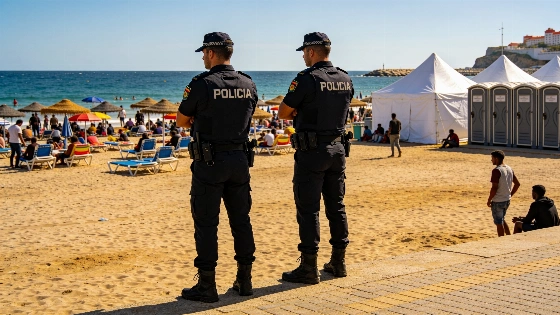
The numbers show why the dispute now goes beyond the border itself. Reuters reported on 18 September that Spanish police had already launched an operation to clear migrants from beaches and move some of them to temporary accommodation.
The authorities are dealing with an ongoing reception crisis, not only preparing for a possible event on 23 September.
On 30 July, dozens of thousands of people crossed from Morocco into Ceuta. The Spanish Government put the total number of arrivals on 30 and 31 July at more than 70,000.
Before attempting the journey, many young Moroccans used Facebook, TikTok and Instagram to exchange information about routes, sea conditions, police surveillance and the equipment used to swim across.
The Spanish government has framed the situation as a border-management and reception crisis. In a 17 September statement published by Moncloa, Grande-Marlaska said Spain was preventing secondary movements from Ceuta to mainland Spain while asylum and return procedures were being handled through the relevant services.
Those online networks are again central to the current warning. The messages do not prove that a new mass entry will happen.
Reports cited by El Confidencial and Hespress say there is no confirmed evidence that border security will be weakened because of the Moroccan elections. The messages have still created a real security concern in a city already dealing with overcrowded facilities and sustained tension.
León says the atmosphere in Ceuta is highly strained. He accuses the central government of failing to act as conditions worsen.
He also blames Marlaska and expects the minister's visit to bring another confrontation over the government's description of insecurity as subjective. His criticism follows