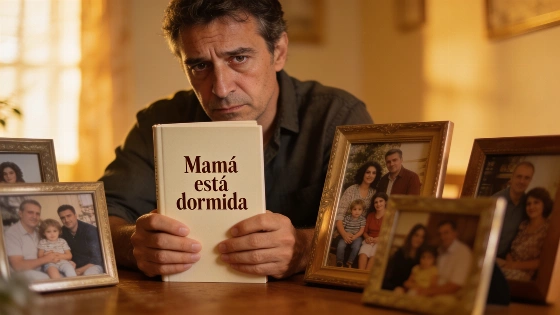
Máximo Huerta releases his eleventh novel, 'Mamá está dormida', focusing on the emotional and social realities of caring for an ill parent. The book highlights the challenges of memory loss and the solitude of caregivers in Spain.
Máximo Huerta has unveiled his latest novel, 'Mamá está dormida', at a press event in Valencia, drawing attention to the often-overlooked struggles of those caring for elderly relatives with memory loss. The author, who has spent the past three years in Buñol tending to his ailing mother, channels his personal experience into a story that examines the fragility of life, the weight of caregiving, and the complexities of memory.
The book, published by Planeta, marks Huerta's eleventh work of fiction. While not strictly autobiographical, it is deeply rooted in lived experience. The narrative opens with a striking moment: the protagonist's mother, suffering from dementia, asks about a brother who never existed, a detail that sets the tone for a journey filled with both affection and pain. The story follows Aurora and Federico—names chosen for their symbolic resonance—as they embark on a road trip in a camper van, accompanied by their aging dog, retracing Aurora's childhood in Vera de Bidasoa. The journey is not only geographical but also a passage through time, touching on the legacy of the Sección Femenina of the Falange Española and the limited choices faced by women of that era.
Huerta's novel stands out for its blend of emotional depth and social critique. Alongside the challenges of illness and caregiving, the book weaves in moments of humor, music, and the everyday life of Spanish roads and bars—a tribute to the author's father, who worked as a truck driver. The narrative highlights the isolation felt by caregivers, the lack of institutional support, and the emotional toll of watching a loved one lose their sense of self. These themes resonate with many families across Spain, where the burden of elder care often falls on individuals with little external assistance.
In addition to exploring the realities of dementia and aging, 'Mamá está dormida' serves as a call to recognize and support caregivers and dependent individuals. The novel also reflects on Huerta's own childhood in Buñol and the role of literature as a source of comfort and escape. The book is dedicated to his mother, Clara, who can no longer read it, underscoring the personal nature of the project.
The release of Huerta's novel comes at a time when Spanish society is increasingly aware of the challenges posed by an aging population and the prevalence of conditions like Alzheimer's disease. The lack of comprehensive support for caregivers remains a pressing issue, as highlighted in other recent news, such as the case of a Barcelona worker whose family continues to seek answers after her death during a heatwave—a story detailed in this report on the ongoing investigation. Both stories point to the urgent need for greater recognition and resources for those caring for the vulnerable.
Spain's demographic trends show a steady increase in the proportion of elderly citizens, intensifying the demand for long-term care and support services. According to national statistics, more than 1.2 million people in Spain live with some form of dementia, and the number is expected to rise in the coming years. Despite this, many families still face significant barriers in accessing adequate care, financial assistance, and respite services. The publication of 'Mamá está dormida' not only brings these issues into the literary spotlight but also contributes to a broader conversation about how Spanish society values caregiving, memory, and the dignity of aging.