Kylian Mbappé has spoken out after controversy over his handling of a Ceuta support shirt before the Elche match. He clarified his intentions and shared his thoughts on the upcoming Ballon d'Or ceremony in Paris. The incident has sparked debate about the role of player gestures in football.
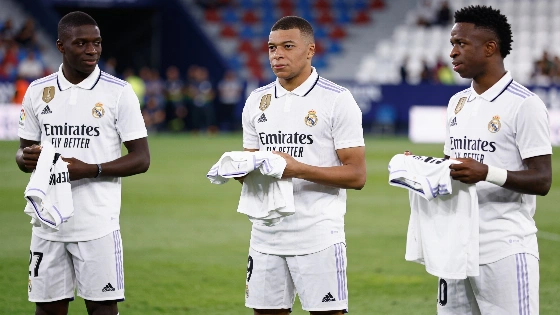
Kylian Mbappé found himself at the center of attention at Martínez Valero stadium, not for his play, but for a gesture before kickoff. Ahead of the match against Elche, Mbappé, along with Konaté and Vinícius, chose not to fully display the shirt supporting Ceuta. The move quickly raised questions about his motives as a Real Madrid player.
Speaking to 'AS', Mbappé said his decision was not meant as a rejection of Ceuta or its victims. He explained that he wanted to show solidarity with everyone facing hardship, including migrants who have died or live in difficult conditions. He called the situation complex and said his gesture was about empathy for all those affected, not about minimizing anyone's suffering.
According to official Real Madrid communications, both teams took to the pitch in shirts bearing the slogan 'Todos somos caballas' as a sign of solidarity with Ceuta before the match against Elche.
The Real Madrid squad had agreed to wear the Ceuta support shirt at the request of the Asociación Valenciana de Empresarios (AVE), joining Elche in a show of unity. But Mbappé, Konaté, and Vinícius removed the shirts right after the pre-match handshake, setting themselves apart from the rest of the team and prompting speculation about their reasons.
Mbappé addressed the criticism, saying he supports Ceuta and its people, but did not want to create a ranking of tragedies. He described himself as someone who wants good for everyone and does not wish to put one group’s pain above another’s. He also mentioned the ongoing challenges in Ceuta since the mass entry event on July 31, pointing to the broader humanitarian context.
The conversation then turned to the Ballon d'Or, which will be awarded in Paris on October 26. While Mbappé had previously sounded confident about his chances, he now played down personal ambition, saying his performances on the pitch matter more than words. He said his main hope is for the Ballon d'Or to return to Real Madrid, seeing the award as something to inspire the club’s fans rather than as a personal prize.
Independent media reports clarify that the controversy was not about refusing to participate in the solidarity action, but about the way Mbappé, Vinícius Júnior, and Ibrahima Konaté wore the shirts—either lifting them to cover the message or removing them quickly, which led to criticism from La Liga president Javier Tebas and public debate.
Mbappé also praised Lamine Yamal, calling him a talented player with a promising future. Despite Yamal’s recent achievements in the league and at the World Cup, neither he nor Mbappé has yet won the Champions League or the Ballon d'Or, leaving this year’s award still undecided.
The incident at Martínez Valero shows how quickly player gestures can become flashpoints in Spanish football, especially when they touch on sensitive social or political issues. Mbappé’s effort to balance support for Ceuta with empathy for migrants highlights the complicated expectations placed on high-profile athletes. As the Ballon d'Or ceremony approaches, attention will stay on both individual performance and how players like Mbappé handle the responsibilities that come with their public roles. The episode reflects the growing scrutiny of footballers’ actions beyond the pitch in Spain.