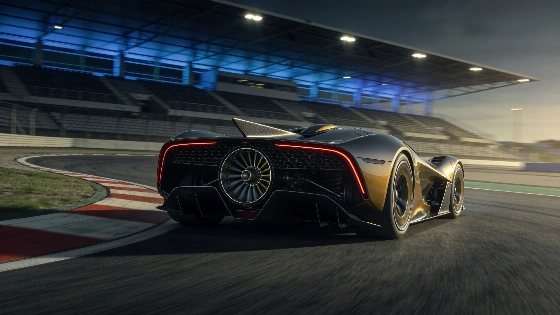
The McMurtry Spéirling Pure is now a reality, offering 1,000 horsepower, 3g cornering forces, and a revolutionary fan-based downforce system. Hand-built in the UK, this electric single-seater sets a new benchmark for track cars.
With the first customer cars rolling out this year, the McMurtry Spéirling Pure has officially entered production, ending a decade-long wait for enthusiasts willing to invest over €1.15 million in the world’s most extreme electric track car. This single-seater, hand-assembled in the Cotswolds, is not just another hypercar—it’s a technological leap that challenges the very limits of circuit performance.
What sets the Spéirling Pure apart is its radical approach to aerodynamics. Thanks to a patented Downforce-on-Demand system, the car generates up to 2,000 kg of downforce from a standstill, using twin fans spinning at 23,000 rpm. This vacuum effect pins the car to the tarmac, delivering up to 3g in both cornering and braking—figures that eclipse even modern Formula 1 cars.
Under the carbon fiber skin lies a new 100 kWh battery, a significant upgrade from the prototype’s 60 kWh pack. This not only extends track range but also boosts regenerative braking to 200 kW, allowing for longer, more intense sessions. The powertrain features advanced Helix electric motors and a revised transmission, sending a combined 1,000 hp to all four wheels. A redesigned front-mounted cooling system further enhances efficiency and aerodynamic balance.
McMurtry Automotive claims that 95% of the components in the production model are entirely new compared to the prototype. The chassis has been reengineered for practicality, with a longer 2.2-meter wheelbase providing more space for the driver. The cockpit now includes night-driving headlights, turn signals, emergency lights, and a dedicated compartment for a helmet and HANS device—details rarely seen in cars of this caliber.
The Spéirling Pure’s suspension has also been overhauled, featuring wider Michelin slicks and a hydraulic power steering system inspired by Formula 1, replacing the previous electric setup for improved feedback. These changes make the car more accessible for owners, without sacrificing the raw, uncompromising character that made the prototype a sensation.
McMurtry first captured global attention in 2022 when the Spéirling prototype shattered the Goodwood Festival of Speed hillclimb record, outperforming established manufacturers. In 2025, it broke the Top Gear test track record, previously held by a 2004 Renault Formula 1 car, and became the first car ever to drive upside down—a feat that cemented its place in automotive history.
For those interested in the technical risks and costs associated with high-performance vehicles, a recent analysis of gearbox failures in both manual and automatic transmissions offers valuable perspective on what can go wrong at the cutting edge of automotive engineering. Read more about the most expensive gearbox failures here.
The Spéirling Pure will make its public debut in final production form at the Goodwood Festival of Speed from July 9 to 12, before heading to the United States for The Quail during Monterey Car Week on August 14. As the electric hypercar segment evolves, McMurtry’s achievement stands out not just for its numbers, but for its willingness to rethink what a track car can be.
Contextually, the Spéirling Pure’s arrival signals a shift in how performance is measured in the electric era. While most electric supercars focus on straight-line speed, McMurtry’s focus on downforce and cornering grip sets a new standard for circuit-focused engineering. The car’s fan-based system revives and perfects a concept last seen in Formula 1’s controversial Brabham BT46B, but with modern reliability and control. For collectors and drivers seeking the ultimate track experience, the Spéirling Pure is not just fast—it’s a glimpse into the future of motorsport technology.