Only 27% of Spanish parents know meningitis can become fatal within hours. Awareness is even lower among teenagers despite the risk of lasting damage.
The Human8 survey ran from 20 May to 12 June 2026. It found that only 27% of Spanish parents know meningococcal disease can become life-threatening within hours. Among Spanish teenagers, the figure drops to 10%. Another 85% do not know how quickly meningitis can progress.
GSK commissioned the international survey. Human8 conducted it across Argentina, Australia, Brazil, France, Italy and Spain. More than 6,000 people took part. The sample included 3,005 parents of children aged between 0 and 18 and 2,998 young people aged 15 to 25.
These are survey results, not official epidemiological statistics. The gap still matters. Early symptoms can look like less serious illnesses.
After the introduction of a conjugate vaccine against meningococcal serogroup A in African countries, cases of this serogroup among vaccinated people fell by more than 99%. Since 2017, WHO has reported no confirmed serogroup A cases in countries that introduced the vaccination.
Invasive meningococcal disease is uncommon, but it can affect anyone. It occurs more often among infants, young children, teenagers and young adults. In its invasive form, it is one of the main causes of meningitis and septicemia.
The World Health Organization calls bacterial meningitis a medical emergency. The illness can come with sepsis, a rapid fall in blood pressure and death.
The central problem is speed.
At first, meningitis can be hard to recognise. Its symptoms may look like those of other conditions. The WHO lists fever, severe headache, a stiff neck, confusion, sensitivity to light, nausea and vomiting as typical signs.
Babies and young children may show different symptoms. They can become lethargic or irritable. Weak, continuous crying, poor feeding or a bulging fontanelle are also warning signs. With meningococcal sepsis, possible danger signals include cold hands and feet, rapid breathing and a rash that does not fade when pressed.
WHO says vaccination provides the most effective long-term protection against common forms of bacterial meningitis, including meningococcal and pneumococcal disease and infections caused by Haemophilus influenzae type b. In 2025, Niger became the first country to conduct a nationwide campaign using Men5CV/MMCV, a vaccine designed to protect against five meningococcal serogroups.
Vaccination remains the most effective long-term protection against common forms of bacterial meningitis, according to the WHO. This includes meningococcal and pneumococcal disease, along with infections caused by Haemophilus influenzae type b.
The figures from Africa show what vaccination can achieve. After countries introduced a conjugate vaccine against meningococcal serogroup A, cases among vaccinated people fell by more than 99%. Since 2017, the WHO has reported no confirmed serogroup A cases in countries that introduced the vaccine.
Coverage is also expanding. In 2025, Niger became the first country to run a nationwide campaign with Men5CV/MMCV. The vaccine is designed to protect against five meningococcal serogroups.
The wider burden remains serious. In 2025, 24 of the 26 countries in the WHO African Region reported 21,526 suspected meningitis cases and 971 deaths. The reported case fatality rate was 4.5%.
The Spanish survey found that only a small minority of parents and teenagers understand how quickly the disease can become fatal. At least one in five survivors may face serious long-term effects. These can include skin scarring, amputations, hearing loss, brain damage or changes affecting vision or memory.
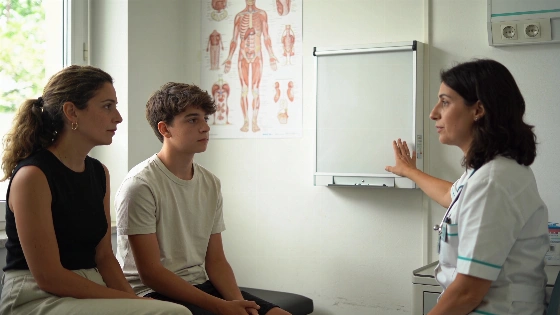
Information sources add another concern. Healthcare professionals are the main reference point for 93% of parents and 87% of teenagers surveyed. Yet 80% of both groups question the reliability of information found online. TikTok and Instagram are among the social networks they consult.
Families want answers online. Trust is weak.
That creates a public information problem. Reliable guidance must compete with claims circulating on social media. An earlier report on official messages and new entry calls at Spain's Ceuta border showed how difficult that competition can be.
The survey does not show how many people could recognise meningitis in practice. It also does not explain why awareness is lower among teenagers. Parents answered about their youngest child in the relevant age group. Young respondents answered about their own situation.
The practical message for Spanish families is direct. Meningococcal disease can progress quickly. Early signs may be difficult to distinguish from other illnesses. Surviving the disease can still bring severe, lasting effects.
Most parents and teenagers do not know enough about that speed. Healthcare professionals remain the most trusted source, while many people question online information. Families need clear explanations before symptoms become an emergency.