Mercedes Milá reflects on her decades in Spanish television, her views on politics, and the impact of Letizia Ortiz on the monarchy. She also addresses the challenges faced by reality show participants and her own career milestones.
Mercedes Milá, one of Spain's most enduring television presenters, has drawn attention with her recent remarks on the monarchy and her own extensive career. In an interview with EL PAÍS, Milá emphasized that Letizia Ortiz's contribution to the Spanish royal family is so significant that, in her words, 'not even in 200 years could she be paid for what she has done.' This statement comes as Milá looks back on more than fifty years in broadcasting, during which she has conducted thousands of interviews and become a familiar face to viewers across the country.
Milá, originally from Esplugues de Llobregat in Barcelona and now 75, did not initially plan to enter journalism. She credits her aunt for recognizing her communication skills and encouraging her to pursue the field. Over time, Milá became known for her direct style and willingness to tackle difficult topics, describing herself as persistent and unafraid to challenge guests, though she rejects the label of being 'conflictive' with colleagues or management.
Her career has spanned a wide range of formats, but Milá is perhaps best known for hosting 'Gran Hermano' for 15 seasons. She describes the show as a sociological experiment, noting the courage and generosity of contestants who agreed to be filmed around the clock. Milá has criticized the stigma some participants faced after leaving the program, particularly those who struggled to find work due to their reality TV exposure. She argues that many critics fail to appreciate the personal risks contestants take.
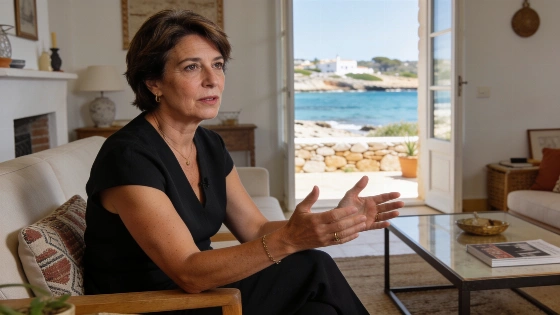
In her latest project, 'Me meto en un jardín' on La 2, Milá has returned to her roots as an interviewer, focusing on asking questions that matter to her. She reflects on how the measurement of television success has changed, and says that her current work brings her genuine happiness. The interview took place in Menorca, at the Salinas de la Concepción, a location recently photographed by Steve McCurry, adding a personal touch to the conversation.
Milá also discussed her early interest in politics, suggesting that if she had studied political science, she might have entered public service or even run for office. She spoke candidly about her interactions with political figures, including her shifting view of José María Aznar, whom she once strongly supported. Her comments on the monarchy were particularly pointed, expressing admiration for Queen Letizia's role and suggesting that her efforts have been invaluable to the institution.
Beyond her professional achievements, Milá touched on her relationships with public figures such as Miguel Bosé, Isabel Preysler, and King Juan Carlos I. She also recalled difficult moments in her career, including feeling betrayed by Luis María Ansón and navigating complex dynamics with Juan Luis Cebrián. Milá expressed a desire to see the King and Queen speak openly about important issues, without filters or prepared statements.
Her reflections come at a time when the role of the monarchy and the impact of media personalities are under renewed scrutiny in Spain. The challenges faced by reality show participants, as highlighted by Milá, echo broader debates about the consequences of public exposure and the responsibilities of broadcasters. These themes have also surfaced in other recent Spanish news, such as the political tensions described in coverage of government criticism and public debate.
Mercedes Milá's career offers a unique perspective on the evolution of Spanish television and public life. Her comments on Letizia Ortiz reflect ongoing discussions about the monarchy's place in modern Spain. The Queen, a former journalist herself, has often been credited with bringing a new approach to royal duties, focusing on social issues and public engagement. As Spain continues to navigate changes in media, politics, and society, voices like Milá's provide insight into the challenges and opportunities facing both institutions and individuals in the public eye.