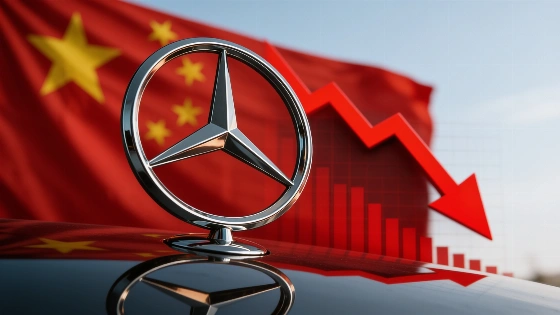
Mercedes-Benz has seen its profits in China plummet by 94% in only three months, despite strong results in Europe and the US. The German brand now faces a critical challenge as local demand for European luxury cars weakens.
Mercedes-Benz has been hit by a dramatic reversal in China, with profits in the world's largest car market plunging by 94% over the past quarter. The German automaker, known for its strong global presence, now finds itself grappling with a sharp drop in demand for European luxury vehicles among Chinese buyers.
According to figures reported by Auto Bild, Mercedes saw its earnings in China fall from €783 million to just €49 million in three months. This steep decline stands in stark contrast to the company's performance in Europe and the United States, where sales and profits have continued to grow. In the second quarter of 2026, Mercedes posted a 13.5% increase in net profit globally, rising from €957 million to €1.09 billion, driven by robust demand in Western markets.
However, the collapse in China has cast a shadow over these results. The Chinese market remains strategically vital for Mercedes, but the brand now faces a critical test as local consumers increasingly turn to domestic manufacturers. New taxes on imported luxury cars have made European models less competitive, while Chinese brands offer more affordable prices and cutting-edge technology that appeal to local tastes.
Other European luxury carmakers, including BMW, Volvo, and Porsche, have also reported significant losses in China, but Mercedes' figures are among the most severe. Some brands have already responded by scaling back their product lines or closing dealerships in the country, underscoring the scale of the challenge facing the sector.
Industry analysts point to a combination of factors behind the downturn: not only have tariffs and taxes increased the cost of European imports, but Chinese consumers are showing a growing preference for homegrown brands that are quick to adopt the latest tech and offer greater value for money. This shift is forcing established players like Mercedes to rethink their strategies if they hope to regain lost ground.
Despite the setback, Mercedes continues to view China as a crucial market and is expected to intensify efforts to adapt its offerings and pricing to local conditions. The coming months will be decisive as the company seeks to stabilize its position and respond to the rapidly changing landscape.
This sharp reversal comes at a time when the global automotive industry is undergoing rapid transformation, with electric vehicles and new technologies reshaping consumer expectations. For readers interested in how other brands are navigating these shifts, a recent analysis compares the Skoda Elroq, Tesla Model 3, and Kia EV4 in the affordable electric segment: see how these models stack up on range, comfort, and value.
Looking ahead, the ability of European luxury brands to compete in China may depend on how quickly they can innovate and respond to local market dynamics. For now, Mercedes faces a stark warning: even the most established names are not immune to the shifting tides of global demand.