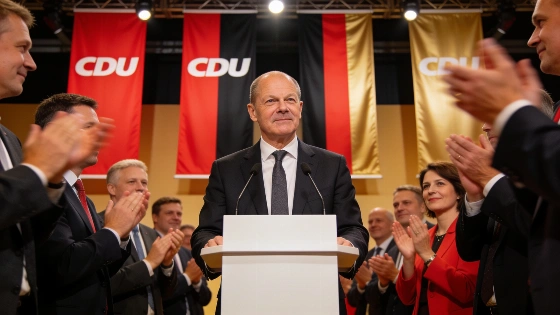
Chancellor Friedrich Merz has announced a new action plan to tackle social benefit abuse. The initiative comes alongside major reforms in tax, pensions, and healthcare. The government aims to restore confidence and drive economic recovery.
Germany is set to introduce stricter measures against social benefit abuse, as Chancellor Friedrich Merz revealed a new action plan during the North Rhine-Westphalia CDU congress in Düsseldorf. The plan, expected to be presented in July, is part of a broader reform package agreed by the coalition government, targeting tax relief, pension changes, and healthcare system restructuring.
Merz emphasized that Germany's most successful years are not in the past, but still ahead, provided the current reform agenda is implemented effectively. Addressing party delegates, he argued that the country has repeatedly overcome crises and that the political center remains capable of delivering solutions and compromise. The chancellor positioned his government as a genuine reform coalition, determined to prove its effectiveness step by step.
The announcement drew strong support from CDU members, especially when Merz dismissed critics of the reform course, urging those he described as pessimists and professional complainers to step aside. He called for optimism and confidence, insisting that the country can return to the level it deserves through determined action.
The coalition of CDU, CSU, and SPD recently approved a comprehensive reform package. Key elements include tax cuts for low and middle incomes, pension system adjustments, changes to statutory health insurance, and efforts to reduce bureaucracy. Merz highlighted that the fight against social benefit abuse is a priority for local politicians nationwide, promising that the government will deliver on its commitments.
Earlier in June, the Federal Ministry of Social Affairs announced the creation of a new competence center within the Federal Employment Agency to address benefit fraud. This aligns with the introduction of a new basic security system, which replaces the previous Bürgergeld and imposes stricter obligations and tougher sanctions on the approximately 5.5 million recipients.
Merz expressed confidence that most citizens do not oppose reforms in principle. He believes the public is willing to support necessary changes, understanding that results will take time. However, he stressed the importance of fairness and shared responsibility in the reform process.
North Rhine-Westphalia's Minister-President Hendrik Wüst assured Merz of his party's support at the state level, which is crucial for passing key reforms such as the statutory health insurance overhaul through the Bundesrat. Merz acknowledged that this particular reform may face the greatest challenges in the legislative process, noting the upcoming votes in both the Bundestag and Bundesrat.
Speculation about internal party dynamics surfaced in May, with some in Berlin suggesting Wüst could be a "reserve chancellor" due to Merz's low poll numbers. Wüst dismissed these rumors, but the CDU congress closely watched every gesture and statement. Merz spoke for five minutes longer than Wüst, who presented the chancellor with a bright yellow cycling jersey as a symbol of perseverance in the ongoing reform race.
Germany's approach to social benefit reform echoes broader European debates about welfare, responsibility, and economic competitiveness. Similar tensions have been observed in other countries, such as the Basque Country's disputes with Madrid over social security powers, as highlighted in a recent report on regional negotiations. These developments underline the complexity of balancing social support with fiscal discipline across Europe.
For context, Germany's welfare system has undergone several major reforms since the early 2000s, with each wave aiming to adapt to demographic shifts, labor market changes, and fiscal pressures. The latest measures reflect ongoing concerns about system sustainability and public trust. As the government moves forward, the effectiveness of these reforms will likely shape both political stability and economic prospects in the coming years.