Imanol Pradales accuses the central government of stalling on the Social Security transfer to Euskadi. Talks have reached a deadlock, raising concerns about respect for regional agreements and the stability of the current legislature.
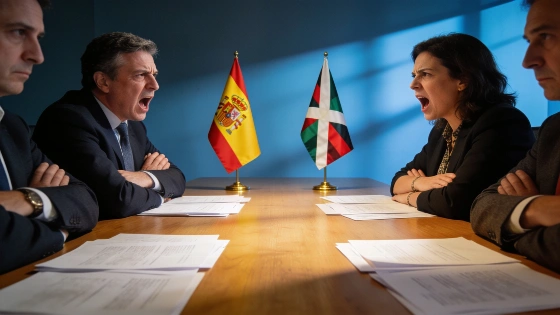
Sharp criticism erupted in Madrid as Imanol Pradales, lehendakari of the Basque Country, publicly accused the central government of blocking the long-promised transfer of Social Security powers to Euskadi. Speaking at the Instituto Cervantes, Pradales described the latest negotiations as a failure, highlighting what he called a “no, without alternatives” stance from Moncloa. The Basque leader warned that this impasse not only undermines trust between administrations but also signals a lack of respect for previously signed agreements.
According to Pradales, recent meetings between Basque officials and representatives from the ministries of Social Security, Labour, and Territorial Policy ended with no progress. He emphasized that the central government has rejected Basque proposals outright and failed to present any counteroffers. This, he argued, leaves the Basque executive facing a wall of resistance, with no clear path forward on the transfer of competencies.
The deadlock comes at a sensitive moment for Spanish politics. Pradales described the current legislative period as “critical,” warning that continued inaction could push the legislature toward instability. He expressed concern that the growing political tension might spill over into broader social discord, potentially threatening democratic norms and everyday coexistence.
Looking ahead to the scheduled bilateral commission meeting with Pedro Sánchez before the end of July, Pradales identified two unresolved issues: the transfer of Social Security management and the control of the ports of Pasaia and Bilbao. He made it clear that progress on these points is essential for restoring confidence between the two governments.
Political friction is not limited to the Social Security dispute. Pradales noted that relations with the Partido Popular are also strained, despite ongoing requests from the PP for PNV support in a potential no-confidence motion. He dismissed the idea of a 'superdomingo'—a day with multiple elections—in May 2027, signaling a preference for a more measured electoral calendar.
This standoff over regional powers echoes broader tensions in Spanish politics, where unresolved autonomy issues continue to test the resilience of national institutions. The situation in Euskadi is reminiscent of other recent political standoffs, such as the pressure on Pedro Sánchez from Catalan parties, which was highlighted when Junts demanded his resignation to prevent a far-right government. For more on how regional demands are shaping Spain’s political landscape, see this analysis of Catalan parties’ influence on national leadership.
For context, the transfer of Social Security management to Euskadi has been a longstanding demand rooted in the Basque Statute of Autonomy. While some competencies have been devolved to other regions, the Social Security system remains under central control, making this issue a litmus test for the government’s willingness to honor regional agreements. The outcome of these negotiations could set a precedent for future autonomy debates across Spain, especially as political fragmentation and regional assertiveness continue to shape the national agenda.