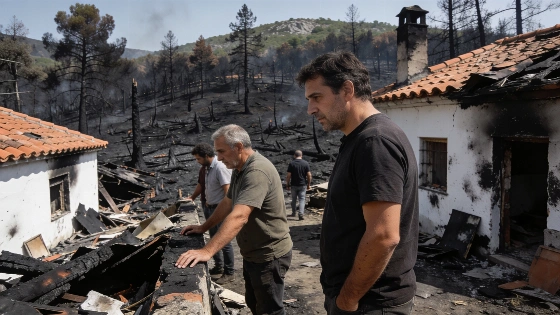
Lionel Messi has donated €80,000 to support reconstruction in Sierra Oeste after a devastating wildfire swept through the Community of Madrid. The fire affected more than 27,000 hectares and forced the evacuation of over 55,000 residents, while destruction spread across 17 municipalities. Spanish coverage later called it the worst blaze in the region’s history. One account reported that more than 29,000 hectares burned after three fronts that started near Villa del Prado and San Martín de Valdeiglesias merged in July. Navas del Rey reportedly lost 85% of its municipal territory. The Unión de Pequeños Agricultores y Ganaderos de Madrid estimated that 18,500 hectares of usable agricultural land were affected.
Regional president Isabel Díaz Ayuso publicly thanked the Argentine footballer on social media and said she hoped Madrid residents would soon have the chance to applaud him in person. The regional government said Messi’s representatives contacted authorities proactively to coordinate the contribution, which will help rebuild affected municipalities. Spanish reports have also associated Messi’s charitable work with support for children’s health and disaster victims. After receiving the Princess of Asturias Award for Sports, he said of charitable giving, “You do it from the heart because you feel it.”
Official figures cited by the regional government show that the wildfire destroyed 100 homes and damaged more than 300 others. The Community of Madrid opened a dedicated donation channel on July 29, raising nearly €200,000 for recovery efforts. The government said the funds would go directly to reconstruction and support for those affected.
Emergency services announced on Tuesday that the wildfire was under control and in its final phase of extinction. Its operational status was downgraded to INFOMA Situation 0, meaning standard resources could manage the fire and it no longer posed a direct threat to people or non-forest property. Firefighters and forest agents continued to monitor the area and extinguish remaining hotspots. They also worked to keep the area safe.
Authorities authorized residents to return to seven previously evacuated residential areas in Pelayos de la Presa and San Martín de Valdeiglesias. Strict precautions remained in place, and the public was urged to report safety concerns, including damaged trees or infrastructure, to emergency services. Swimming and other water activities remained prohibited at the Pantano de San Juan and Playa del Alberche during safety checks.
The disaster has drawn national attention, and the Madrid government has stressed the value of community support and outside aid. The regional response has also provided more than 50,000 hours of home assistance, along with administrative help and accompaniment for affected residents, including older people and those with disabilities or dependency-support needs. The service was extended in October 2026. Psychological support was arranged for residents and staff at 14 evacuated care homes. These measures operate alongside Spain’s existing dependency-support system and other public services.
Coverage of the fire’s severity has focused on extreme heat and water stress, as well as the risks facing settlements where homes meet forested land. The merged fronts at one point threatened to connect with the Burgohondo fire in Ávila. Across Spain, nearly 280,000 forest hectares had burned in 2026 by October, about 2.5 times the average for the previous decade. The response to the Ceuta border crisis also showed how coordinated action can help manage large-scale emergencies, as discussed in this analysis of EU support for Spain during the Ceuta incident.
Wildfires remain a recurring threat in Spain, particularly during periods of extreme heat and drought. The Sierra Oeste fire ranks among the region’s largest in decades. It points to the need for prevention, while rapid response and sustained recovery efforts remain impressive. Public figures and the wider community continue to contribute to rebuilding affected areas and preparing for future emergencies.