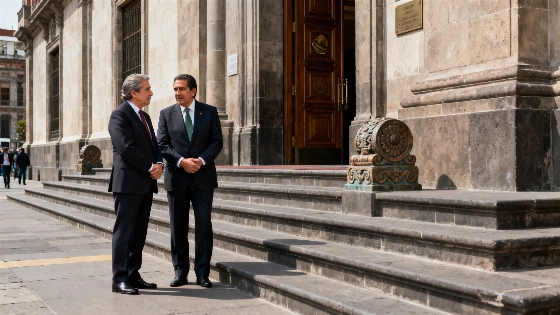
Visit of Spanish Deputies to Mexico Canceled by Country's Authorities. Mexico has canceled an interparliamentary meeting with Spanish deputies. The reason—the authorities' concerns over possible criticism directed at the president. The decision highlights ongoing tensions in relations between the two countries.
The interparliamentary meeting between deputies from Spain and Mexico, scheduled to take place soon in Mexico City, has been canceled at the initiative of the Mexican authorities. According to ABC, the decision is linked to the administration of Claudia Sheinbaum wishing to avoid a repeat of a recent incident during the visit of the President of the Community of Madrid, Isabel Díaz Ayuso. On that occasion, her stay in the country was marked by public disputes with Sheinbaum and ended with Díaz Ayuso's early departure due to stated concerns over her safety.
Talks regarding the visit of a Spanish delegation began early this year. The president of the Mexican Chamber of Deputies, Kenia López Rabadán, representing the opposition, coordinated the arrival of 18 Spanish parliamentarians with the head of the Spanish Congress, Francina Armengol. The delegation was to include representatives from all major Spanish parties. However, when López Rabadán sought final approval from the Chamber's leadership, which is controlled by supporters of the current government, she was advised to postpone the meeting.
According to ABC, the Chamber's leadership had no formal objections; however, the Mexican Foreign Ministry considered that the arrival of lawmakers from the Partido Popular or Vox could lead to public criticism of Sheinbaum. Within the Chamber itself, responsibility for the decision was assigned to the foreign ministry. As a result, the official meeting has been canceled, and a possible visit by Francina Armengol is now being considered only on a private basis.
The context is complicated by the fact that in recent months, Mexican authorities have shown increased caution toward foreign delegations and leaders who might criticize domestic policy. The country's president regularly raises the issue of external interference and emphasizes sovereignty in public statements. In the case of Díaz Ayuso, according to ABC, special concern was caused by her meetings with Mexico's opposition politicians, not only her remarks regarding the events of the Conquest era.
Relations between Mexico and Spain remain tense following a period of conflict under former president Andrés Manuel López Obrador. Now, the governments of Claudia Sheinbaum and Pedro Sánchez are seeking to restore dialogue. In the coming days, Spain’s Minister of Economy, Carlos Cuerpo, is expected to visit Mexico City, aiming to persuade Sheinbaum to participate in the upcoming summit in Madrid. By comparison, other international events, such as the Champions Cup final in Bilbao, recently covered by russpain.com (details on the sporting event in Bilbao), take place without such diplomatic complications.
For reference: Interparliamentary meetings between Spain and Mexico have traditionally served as a platform for discussing economic, cultural, and political issues. However, after tensions escalated over historical topics and demands for apologies for the Conquest, dialogue between the countries has become less predictable. In 2026, Spain remains one of Mexico’s key economic partners in Europe, and any disruptions in bilateral contacts could impact investments and joint projects.