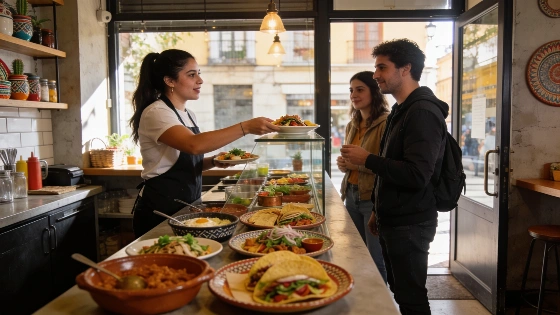
Madrid now has 187 Mexican restaurants, reflecting the Mexican community’s growth. It has doubled in the region over the past decade and is expected to reach 27,259 residents by 2025. New spots are drawing locals and expats in search of flavors beyond the usual Tex-Mex.
Entrepreneurs like Eli Cervantes are driving this shift. She arrived in Madrid in 2023 as a student and now runs Pancito Perrón, a busy café near Atocha. Cervantes began baking traditional Mexican bread in a rented kitchen, but demand for specialties such as pan de muerto soon outgrew the space. She and her partner invested up to €100,000 to open their own place, which now serves dishes ranging from chilaquiles to tortas, priced between €2 and €11. Cervantes estimates that about 70% of her regulars are fellow Mexicans, a sign of the community’s strong support network.
Madrid will welcome the first European branch of Michelin-recognized taquería La Once Mil in 2026, reflecting growing interest in premium Mexican cuisine in Spain’s capital.
These restaurants draw diners beyond the diaspora, too. Mario Sorribas-Fierro of OBS Business School says Madrid is in the middle of a “taco boom,” much like other European cities. More Spanish diners are seeking authentic Mexican food and looking beyond the basics. That demand has attracted small investors alongside major chains. El Bajío, a well-known chain from Mexico City, opened a branch in Castellana in 2023 and has already earned a Michelin Guide recommendation. Sector media report that Mexican restaurants in Madrid are multiplying and gaining recognition, with several now listed by Michelin and similar guides.
The Copil seal, awarded by Casa de México in España and the Mexican Gastronomy Academy, formalizes recognition for quality. Only 54 restaurants in Madrid have earned the distinction, which requires strict standards for authenticity and quality. Since the program launched in 2022, it has rejected 63% of applicants. The seal has expanded across Spain, where 136 restaurants now hold the title. Official figures for Mexican restaurants and residents in Madrid can vary, and some need further confirmation from sources such as INE and city registries.
Investment in Mexican food reaches beyond the kitchen. The market for Mexican spirits has grown quickly: Spain is now the world’s third-largest importer of tequila and the second-largest in the EU. Companies like Entre Compas, founded by Wilmer Yajamín and Felicia Cobone, supply tequila and mezcal, among other Mexican spirits, to more than 800 establishments across Spain. That marks a sharp change from just over a decade ago, when Mexican drinks struggled to find a place in the Spanish market.
City announcements now include Mexican cuisine in Madrid’s official cultural program: Hispanidad 2026 is set to feature culinary activities, including the major Agave and Corn Great Mexican Festival, reflecting institutional attention to Mexican culture in the capital.
The Mexican community in Madrid is concentrated in wealthier districts, including Chamartín and Salamanca. Residents also live in Chamberí and Moncloa-Aravaca, as well as Retiro. Of the 27,259 Mexicans in the region, 10,633 live in the city itself. They are the eleventh-largest Latin American group in Madrid, but their economic and cultural influence is especially strong in hospitality.
As Mexico approaches 204 years of independence, Madrid’s Mexican community will celebrate in a city that once ruled their homeland. Trompo and Bajío will serve as gathering places, with Pancito Perrón also drawing the community into the city’s multicultural story. The rapid growth of Mexican entrepreneurship in Madrid shows how migration and investment, alongside cultural pride, can reshape a city. The Copil seal and the success of authentic venues point to lasting demand for Mexican food, enriching Madrid’s food scene.