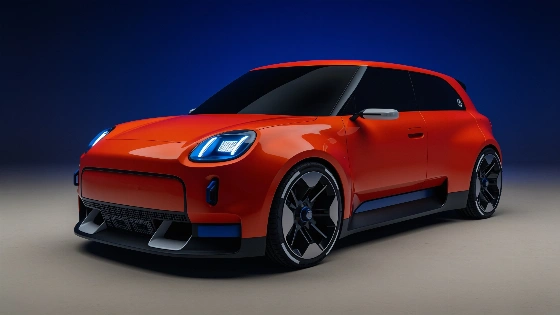
MG unveiled the MG GO! concept at the 2025 Goodwood Festival of Speed, presenting a five-door electric supermini as a preview of a production model planned for 2027. The car is aimed at the affordable B-segment EV market, where it would compete with models including the Renault 5 E-Tech and MINI Cooper Electric. Other potential rivals include the Volkswagen ID. Polo, Citroën ë-C3, BYD Atto 1 and Honda Super One.
Developed by MG’s London design team under Design Director Carl Gotham, the GO! draws on the marque’s British heritage without simply reproducing an older model. Its styling references include the MGB GT and MG Metro Turbo, as well as the MG 6R4. The design brief focuses on giving a modern compact EV an approachable, emotionally distinctive character. The production car’s final name has not been settled publicly; “MG2” has been reported as a possible designation.
MG is now owned by SAIC Motor, and the GO! shows how the brand is bringing its historic identity into a contemporary electric-car range. Its compact proportions are intended to suit urban use, while its styling connects the new model with MG’s sporting lineage. Reported design references also include the MG ZR and MG EX4.
The GO! is expected to be about four metres long, close to the Renault 5’s 3.92-metre footprint. Automotive reporting has linked the future model to MG’s E+ platform, also used by the front-wheel-lead MG4 Urban. That shared architecture would support a cost-conscious approach to the B-segment, though the final production engineering and equipment specification will determine how the car compares with its rivals.
Industry estimates associate the GO! with a front-mounted electric motor producing around 149 to 150 hp and a 43 kWh lithium-iron-phosphate (LFP) battery. These are projected figures, not a published production specification. The battery chemistry and reported powertrain so describe expectations for the car, not certified performance data.
Beyond Nostalgia: Modern Engineering
Although the MG GO! remains a concept, its development at MG’s London design centre shows the brand’s effort to combine British design cues with an electric-car platform suited to a price-sensitive market. The styling brief aims to create a practical, contemporary urban car rather than a straightforward retro exercise.
Alongside the MG GO!, MG introduced the MG Cyber Concept at Goodwood, a high-performance, all-electric SUV aimed at the D-segment. Drawing inspiration from the EX181 land-speed-record car, the concept extends the brand’s sporting heritage with SUV versatility and sports-car character.
Tech Ambitions and Industry Context
MG’s presence at Goodwood also included a showcase of robotics and AI-driven technologies at the Future Motion Show, highlighting the brand’s broader interest in autonomous driving and connectivity. Its compact-EV project reflects a wider contest among automakers to combine distinctive design with competitive pricing in Europe’s expanding electric-car market.
Pricing estimates place the MG GO! at around €23,000, with another estimate near €24,000. Those figures are targets and industry projections, not a confirmed MG list price; the eventual price will depend on market, trim, incentives and taxation. For comparison, the Renault 5 E-Tech has been reported with a starting price of €24,900. The comparison points to the GO!’s apparent aim to undercut the Renault, but the MG remains a concept awaiting production development.
Automotive reporting has also connected the GO! to MG’s E+ platform and components associated with the MG4 Urban, but this does not establish a production-car specification. A possible European manufacturing plan is separate from the projected 2027 model timetable: reports have pointed to a planned SAIC-linked facility in Galicia, Spain, where production could start in late 2028. That schedule would place local manufacturing after the model’s currently planned arrival.
The production version is planned for 2027, while the reported Spanish factory timetable points to a later phase. As the project advances, its final name, engineering and market pricing will shape its challenge to the Renault 5 E-Tech and other compact electric cars. MG’s basic proposition is clear: the company intends to pair a recognisable design identity with an affordable position in the city-EV segment.
The strategy echoes moves by other Chinese brands, including BYD. Its Shark plug-in hybrid pickup has been positioned to challenge established players in the utility segment, a development covered in this recent analysis of BYD’s European strategy.