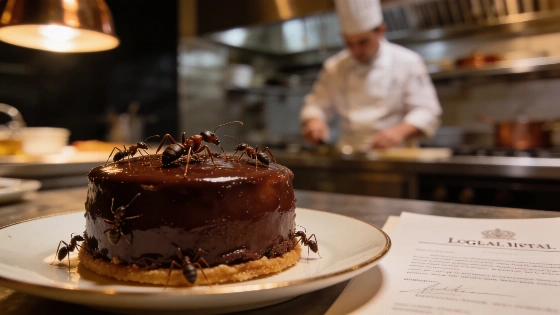
South Korean prosecutors sought a one-year prison sentence for the owner of a two-Michelin-starred restaurant in Seoul after authorities found ants used as a dessert garnish. Case materials identify the defendant by the surname Kim. He was accused of serving ants that are not among the insect species approved for human consumption in South Korea. The chef who prepared the dishes was not charged.
Investigators alleged that the restaurant imported and used about 49,000 dried ants over four years, starting in 2021, from the United States and Thailand. The ants reportedly went into several dishes, including sorbets. The Ministry of Food and Drug Safety opened an inquiry after online reviews showed photographs of dishes decorated with ants. Its tests found heavy-metal concentrations in the insects as much as 55 times higher than levels permitted for other edible insects, The Chosun Daily reported.
The owner admitted that ants had been served but argued in court that they were an optional topping, offered in a small portion of the 15-course tasting menu. He said about 60% of diners chose to try them, while other guests were offered alternatives such as fermented vinegar or edible flowers. He also noted that restaurants in Australia and Denmark use ants in their cuisine, and said the practice extends to the United Kingdom. Prosecutors requested a 20 million-won fine also to the prison term.
South Korea allows only specified insect species to be sold as food. The approved list includes ten species, among them grasshoppers and silkworms. Approval considers food safety and toxicity, along with nutritional characteristics. It also takes into account whether insects can be bred hygienically, then handled and processed under hygienic conditions. The country has a customary insect-food market, including beondegi, a snack made from steamed silkworm pupae, but that tradition does not exempt unapproved species from the rules. Scientific reviews identify heavy-metal accumulation as a potential food-safety issue for insects, with concentrations affected by their feed or rearing substrate. In this case, the regulatory breach involved ants outside the approved list and contaminant levels found in the seized product.
On 18 October 2026, reports said the Western District Court of Seoul fined Kim 15 million won instead of imposing the prison term sought by prosecutors. The court reportedly considered Kim’s lack of prior convictions and concluded that the number of ants actually used may have been lower than prosecutors alleged. It treated the use of unapproved insects as a potential risk to diners, while accounting for uncertainty about the quantity when setting the penalty. The restaurant’s name was not disclosed.
Ants are eaten in cuisines across Asia and Africa. They also appear in Latin American dishes, including weaver ants in Thailand and queen ants in Colombia. South Korea’s rules distinguish customary food practices from the specific insect species authorized for sale. Michelin stars recognize restaurants for cooking quality and consistency, but do not exempt them from national food-safety regulations.