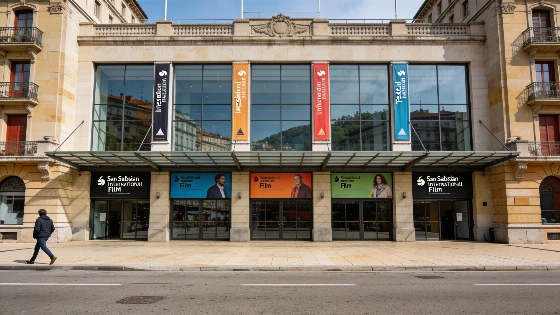
At the 74th San Sebastián Festival, Mike Leigh's Tender Loving Care took home the Golden Shell. Leigh sent his acceptance message from New York and could not attend the closing ceremony in person. He has described the film as probably his final one because of his medical condition.
The film also received the screenplay award and the Transforma Make and Mark Prize, along with the award for best leading performance. Kate O'Flynn shared the acting prize with Asta Kamma August for Growth of the Soil.
San Sebastián's official release confirmed the film's sweep of the festival's basic awards. The edition also marked José Luis Rebordinos's last as festival director, and the audience gave him a standing ovation.
In a video message, Leigh thanked the festival and said he loved the audience. He also thanked San Sebastián for the four awards. O'Flynn missed the gala too.
The British production won the screenplay award and the Transforma Make and Mark Prize, along with the Golden Shell and O'Flynn's acting award. The official jury recognised the film in the festival's central categories.
August shared the acting prize for Growth of the Soil.
August used her acceptance speech to speak about empathy and solidarity. She wore a Free Palestine pin. Films, she said, can place viewers inside another person's mind. She also called for freedom for Palestinians.
The ceremony took a political turn.
The mood carried on when the audience later rallied around Naza.
Javier Cámara won the Silver Shell for best supporting performance for Cinco minutos más by Javier Ruiz Caldera. He joked that the year belonged to the Javis. Berto Romero, Ruiz Caldera and Belén Cuesta shared the recognition with him.
Cámara also thanked Rebordinos for taking the risk of placing a fantasy film in the Official Selection.
Amanda Kernell won the Silver Shell for best director for Brace Your Heart. The Special Jury Prize went to Border by Ah Biao, while Growth of the Soil won the cinematography award.
Ira Sachs chaired the official jury. Its other members were Genki Kawamura, Catherine Paillé, Alice Braga, Patricia López Arnaiz, Bill Skarsgard and Mike Goodridge.
Audience choices produced two of the festival's most visible moments.
Naza won the Ciudad de Donostia Audience Award for Best European Film. Its directors, Yuval Abraham and Rachel Szor, were absent. Israel is investigating them over possible leaks of classified information connected with the documentary.
The film examines Israeli intelligence and military systems used in operations in Gaza, along with the consequences for civilians. Producer Enrique Costa accepted the prize for the filmmakers and read their message.
Viewers raised sheets bearing the words "We are Naza too" and Palestinian flags. The presenters displayed the same message.
The other major audience award went to La bola negra by Javier Calvo and Javier Ambrossi. The directors thanked viewers for backing Spanish cinema and linked the film's relationship with its audience to Federico García Lorca's ideas about creation.
That connection was also explored in the Granada feature.
Calvo said the pair had built their careers through experiments and successes, learning from mistakes with an audience beside them. Ambrossi thanked Rebordinos and the technical team. He promised not to disappoint viewers.
The award recognised the public's role in keeping the filmmakers going.
The remaining awards went to De repente by Ryusuke Hamaguchi for Premio RTVE-Otra Mirada; Cinco años cuatro meses by Juan Miguel Gelacio and Esteban Hoyos García for the Spanish Cooperation Award; Burgundy by Michael Dweck and Gregory Kershaw in Culinary Zinema; Txakun Txakür by Elsa Oliarj-Inès for the Irizar Basque Film Award; Adolescencia sexo y muerte en campamento Miasma by Jane Schoenbrun in Zabaltegi-Tabakalera; La ilusión de un verano sin fin by Alessandra Sanguinetti for Horizontes Latinos; and Amine Bouhafa for best original music for 7h40 ce matin-là.
Leigh's film led the official awards. The audience chose films tied to Spanish identity and Gaza. Rebordinos left after an edition that made room for established cinema and contested subjects.