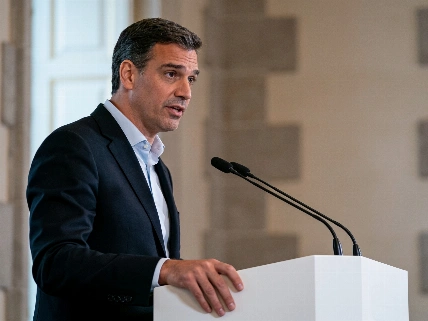
María Jesús Montero, the PSOE leader in Andalusia, called on her party to reassert 'order, security and protection' as fundamental socialist values, challenging the idea that conservatives have a claim to them. At the Interparliamentary meeting in Seville, she addressed regional and national representatives as the party prepares for the 2027 municipal elections and faces mounting criticism over the government’s response to the migrant influx in Ceuta.
Montero argued that the right has wrongly monopolized the concepts of order and security, as the crisis in Ceuta deepens political divisions. She accused PP and Vox leaders of exploiting public fears to justify more authoritarian responses. She also criticized what she called Vox’s 'testosterone-driven leadership', saying it promotes the use of physical force. The PSOE, she insisted, must reclaim these values as part of its project, rather than cede them to conservative rivals.
The Andalusian PSOE leadership has decided to stay away from Wednesday’s rallies in support of Ceuta, organized unilaterally by the PP through the Spanish Federation of Municipalities and Provinces. A few socialist-led municipalities, including Espartinas and Chiclana de la Frontera, have opted to join. But the vast majority of the 459 PSOE-governed towns will follow the federal party’s directive to abstain. The executive views the demonstrations as politically targeted against Prime Minister Pedro Sánchez. Neither the PSOE nor other opposition groups will attend the flag-raising ceremony at the Andalusian Parliament, initiated by its PP president, Ana Mestre.
Montero also pledged a 'firm and responsible' opposition to the PP-Vox coalition running the Junta de Andalucía and proposed a climate pact to tackle droughts and floods, as well as wildfires in the region. The 2027 municipal elections are seen as a impressive chance for the PSOE to rebuild its local power base, weakened after the 2023 local polls. At an upcoming municipal convention, the party plans to highlight housing and care policies, alongside its focus on social cohesion.
The debate over Ceuta’s border crisis has exposed deep rifts between Spain’s basic parties. A recent report on the political fallout from the Ceuta migrant surge noted that calls for solidarity have met with partisan maneuvering, making a unified response harder to present. The PSOE’s current strategy reflects the urgency of the migration issue and a broader contest over which party can credibly claim to defend public order and security.
Andalusia remains a basic battleground in Spain’s political future. Its large population and history of socialist governance make the region basic to national electoral strategies. By seeking to reclaim basic values and resist right-wing narratives, the PSOE is shifting its tone as it tries to recover ground lost in recent years. The outcome could shape local politics and the broader direction of Spain’s left ahead of the next general election.