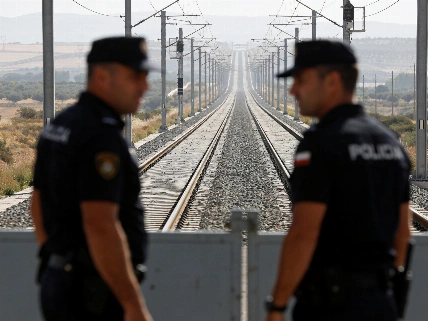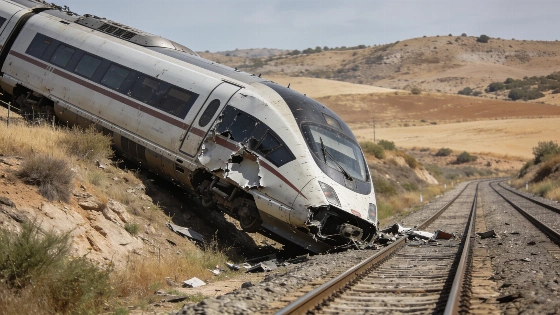
The collision near Urda in Toledo left 68 people dead and more than 100 injured as of the report, after more than 500 passengers travelled on the AVE and Iryo trains on the Madrid-Seville route. Many of the injured were reported to be in serious condition. The crash happened shortly before 09:00 on 28 October 2026, when a Renfe AVE struck a stationary Iryo train from behind. Rescue operations continued as casualty figures changed: an initial Adif account cited 10 deaths, while Transport Minister Óscar Puente later reported 68 deaths and around 50 injured at his briefing.
Juan Manuel Moreno called on the Spanish government to inspect every railway in Andalusia, focusing in particular on the high-speed line linking the region with Madrid. He connected the Toledo crash to the disaster at Adamuz in Córdoba province, where 46 people died nine months earlier. Moreno said the two accidents on the route had claimed at least 114 lives.
He also argued that the government, responsible for Spain’s railway infrastructure, must provide clear information and guarantee passenger safety. His demand followed the transport minister’s account of an order from the control centre that allowed the AVE to move while the Iryo train was stopped and a red signal was showing. Puente said the LZB train-protection system failed at about 08:30 because of a computer communications problem affecting around 63 kilometres of railway. LZB remained in use on the Madrid-Seville route, while the newer ERTMS system had been installed on other parts of Spain’s high-speed network. The control centre authorised the AVE to resume at 08:36. It travelled about 25 kilometres before the collision at approximately 08:53. Puente described the decision to restart the train as inexplicable and said a rear-end collision on high-speed rail was exceptionally unlikely under normal protections. The CIAF opened a technical investigation, and Guardia Civil officers questioned the Adif control-centre operator. Adif said it was analysing its systems and the sequence of events; no responsibility had been assigned.
The crash brought political activity in Andalusia to a halt. The regional parliament’s president, Ana Mestre, cancelled a plenary session scheduled for that day and the next. Lawmakers and parliamentary staff held a minute of silence outside the building. Parties suspended campaign events, with Vox the exception. The campaign setting had also featured in coverage of a Madrid protest.
Moreno said he was especially concerned about former Labour Minister Fátima Báñez, from Huelva, who had been travelling on one of the trains to attend a business event with him in Seville. When he made his statement, he said he had not yet heard from her. The Andalusian government offered logistical and emergency-resource support to Castilla-La Mancha president Emiliano García-Page and declared three days of official mourning.