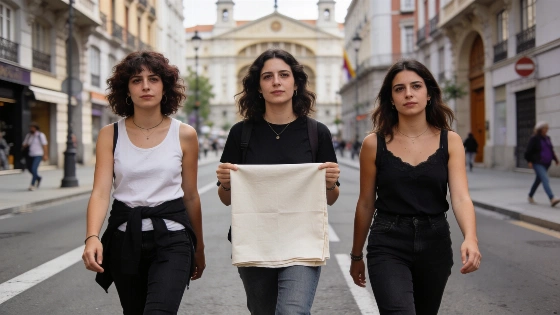
Women from Ceuta marched in Madrid to draw attention to persistent insecurity and the city’s lack of normality. The protest came as parties campaigned ahead of the 29 November general election.
Clashes in basic Barcelona ended with 128 people detained after looting and vehicle fires, information from reports on the unrest. Investigators said social media had helped encourage the gathering. The episode put security on the campaign agenda, alongside disputes over Ceuta and the direction of the country.
Women from Ceuta took their concerns to Madrid on Sunday, 25 October. The Mujeres 'Caballas' movement organised the march to bring the city’s crisis back into public discussion. Organisers linked their call to the mass arrival from Morocco on 30 July, reported at approximately 80,000 people, and said Ceuta had not returned to its previous level of normality nearly three months later. They cited insecurity and what they described as the Administration’s slow response. The march began at 11:30 at the Atocha roundabout and continued along Paseo de Recoletos towards the Plaza de las Cortes, beside the Congress of Deputies. Organisers planned to read a manifesto there. Europa Press reported that the movement wanted action within 30 days. Its demands included stronger border enforcement and the return of migrants, as well as additional public services and reform of Spain’s immigration law. It also called for the producing results use of European return procedures. The movement promoted the demonstration with the slogans “Ceuta se planta en Madrid” and “Ceuta no se vende, Ceuta se defiende.”
Juan Jesús Vivas, president of Ceuta, thanked the women for their persistence and affection for the city. He also acknowledged the roughly 1,000 Ceuta residents who travelled by boat to join them. The demonstration, he said, showed that residents wanted calm and coexistence. Vivas argued that Ceuta had not returned to normal after three months. He said its economy had fallen by five points of GDP and called the situation unsustainable. Recovery, he argued, depended on the return to Morocco of people who had entered irregularly.
Politicians from across the campaign condemned the Barcelona unrest. Míriam Nogueras, Junts’ candidate for Congress in Barcelona, said Catalonia should not become a place where businesses open in the morning only to be wrecked at night. She urged Salvador Illa, president of the Generalitat, to understand Junts’ opposition to extremism and polarisation. Xavier Garcia Albiol, Badalona’s mayor and the PP candidate for Barcelona, called for the law to be applied with full force. He said violence and vandalism must not go unpunished.
Pedro Sánchez used a rally in Granada with María Jesús Montero to attack the opposition. He pledged to protect abortion rights in the Constitution and raise the minimum wage with or without employers’ backing. Sánchez has also taken his message to television; a report on his television interview recorded its audience figures. Alberto Núñez Feijóo held a rally in Vigo and focused part of his speech on corruption allegations surrounding the PSOE.
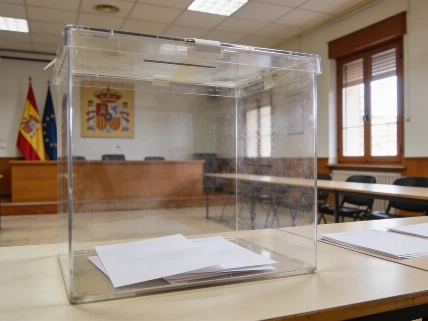
Polling on postal voting points to a sharp divide in trust. Two in three PP voters and 91% of Vox voters distrust the system. On the left, 11% express doubts, while two in three have a high level of confidence. An estimated 4.8% of residents who intend to vote are expected to use postal ballots, around 1.6 million people.
Sánchez has returned to warnings about censorship and political regression, invoking Franco to mobilise supporters. Major polling firms have reported no sign that the right’s projected absolute majority is at risk.