Spanish officials expected a major Moroccan security presence at the Ceuta border, but thousands crossed as Moroccan forces did little to intervene. The incident revealed a serious breakdown in border cooperation and raised questions about Morocco's intentions.
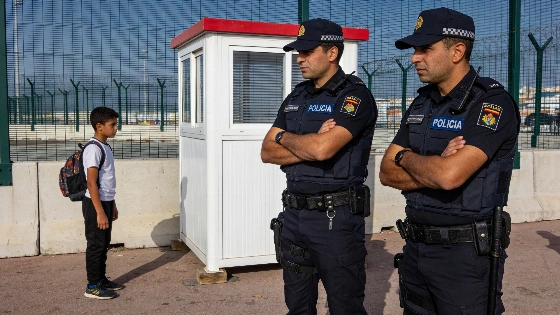
On the day thousands tried to cross into Ceuta, Spanish officials were waiting for a promised deployment of 1,000 Moroccan gendarmes. That backup never arrived as expected. Instead, Moroccan security forces on the ground mostly watched as groups approached and entered the Spanish enclave with little resistance.
This lapse in border control did not surprise everyone. Internal Guardia Civil reports, written as the crisis unfolded, noted that such a large movement of people was unlikely without at least tacit approval from Moroccan authorities. The documents pointed out a sudden change: Moroccan forces, who had previously detained would-be migrants and moved them inland, stopped intervening on the day of the mass entry.
Spanish Prime Minister Pedro Sánchez publicly stated that the government has no firm evidence Morocco orchestrated the mass entry into Ceuta, but acknowledged Moroccan police allowed border crossings for about 10 hours during the crisis.
Spanish intelligence officers quickly saw the implications. In towns near Ceuta, such as Castillejos and Rincón, thousands of North Africans waited for the right moment to cross. Social media groups openly encouraged a coordinated push, timing it with Morocco’s Throne Day celebrations—a major national holiday that draws attention away from routine border enforcement.
By midday, the border situation had become unmanageable. The Guardia Civil’s State Major sent urgent requests for reinforcements, reporting up to 6,000 people gathering near the fence. Despite earlier assurances, Moroccan forces did not step in. The Spanish Ministry of the Interior responded by sending military units to help the overwhelmed border guards.
Official Spanish reports later confirmed that, although Morocco had announced a deployment of 1,000 extra security personnel, their presence was mostly symbolic. The agents on the ground did little to stop the mass movement, a fact noted by Spanish authorities. The Guardia Civil’s intelligence division concluded that such passivity was unlikely to be accidental, given Morocco’s tight control over its security forces.
Internal Spanish police and intelligence reports described Morocco's actions during the Ceuta crisis as 'total permissiveness,' noting there were no serious attempts to disperse or push back the crowds at the border during the critical period. This assessment is now part of an ongoing judicial and political investigation in Spain, with the National Court judge requesting detailed reports from the Guardia Civil.
The episode exposed a major vulnerability in Spain’s border management. When cooperation with Morocco breaks down, Spanish forces are left to handle sudden surges with limited resources. The timing—during a major Moroccan holiday—suggests a deliberate decision to relax controls, whether for political leverage or other reasons. For Ceuta, the result was immediate: a sudden influx of migrants, a scramble for reinforcements, and a reminder that border security depends as much on political will as on fences and patrols.
Spain’s reliance on Moroccan cooperation for border control is nothing new. The events in Ceuta show how quickly that arrangement can fall apart when trust erodes or interests diverge. The official story of reinforced security did not match what happened on the ground, leaving Spanish authorities to deal with the aftermath. This incident highlights how fragile bilateral agreements can be and the risks of depending on another country for key aspects of national security. When one side chooses not to act, the consequences are immediate and far-reaching.