Moroccan authorities have stopped hundreds of migrants from reaching Ceuta. A large police operation sealed the border, preventing a repeat of July's mass entry. Spain maintains reinforced security in the area.
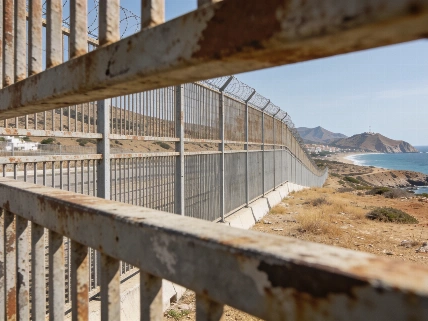
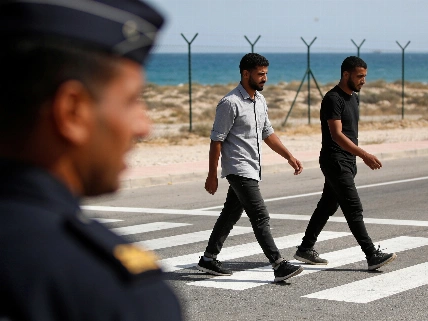
Morocco has demonstrated its full capacity to control the border with Ceuta, deploying an extensive police force on Saturday to prevent hundreds of migrants from reaching Spanish territory. The operation, which included riot police, drones, and helicopters, effectively sealed off the main crossing points and halted any attempt to repeat the mass entry that overwhelmed Ceuta at the end of July.
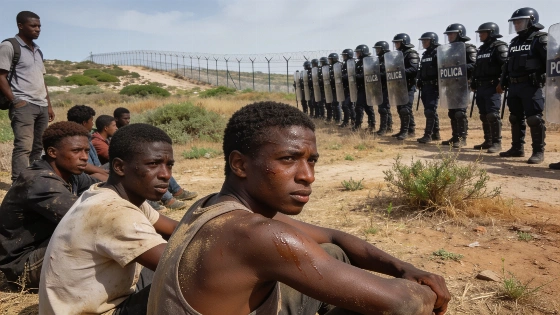
According to the prefecture of Tetuán, Moroccan authorities detained 294 migrants in and around Fnideq by early afternoon, most of them from sub-Saharan Africa. The detainees were transported by bus to distant southern cities, such as Uarzazate, over 800 kilometers from Ceuta. The police action followed calls on social media for a new mass crossing, similar to the July surge that saw up to 80,000 people enter the Spanish enclave amid minimal resistance from Moroccan security forces.
Throughout the day, Moroccan riot units used tear gas and coordinated charges to disperse groups of migrants near the border. Some attempted to set fires to cover their retreat, but aerial surveillance forced them to abandon their efforts several kilometers from the fence. By late afternoon, those who escaped the police cordon were seen moving toward the forests near Belyunes, visibly exhausted after hours of confrontation.
Among those stopped was Alí Kuné, a 28-year-old from Chad, who described the desperate conditions in the makeshift camps and the hope of reaching Europe. Others, like 15-year-old Amadou al Mayar from Nigeria and Abdulá al Beij from Morocco, expressed frustration and determination to try again, even considering alternative routes such as Melilla. Despite heightened tension, Melilla remained calm, with Spanish forces maintaining a strong presence along the border and no new entries reported.
Morocco's security measures extended to Beni Enzar, the main crossing to Melilla, where dozens of military and police personnel were stationed. Temporary camps and riot gear were visible, underscoring the scale of the operation. On the Spanish side, nearly 3,600 police, Guardia Civil, and military personnel were on alert, though only a fraction were deployed directly at the border. The reinforced presence followed the July incident, when the regular contingent was quickly overwhelmed by the influx.
Spanish authorities have emphasized the importance of Moroccan cooperation in managing the border. As highlighted in recent coverage of the Ceuta crisis, Spain has ruled out transferring migrants to the mainland and insists on rapid returns to Morocco. Interior Minister Fernando Grande-Marlaska has repeatedly described the collaboration as exceptional, noting that over 90% of those who entered Ceuta irregularly in July were returned within 24 hours. However, the process for those still in Ceuta is more complex, as immediate returns are no longer legally possible.
To address the backlog, Spanish police have begun individualized identification and expulsion procedures, with 26 specialists sent to Ceuta to speed up the process. The situation is even more complicated for the nearly 1,900 unaccompanied minors, requiring detailed reports and coordination with Moroccan authorities. Meanwhile, the city continues to host thousands of irregular migrants, and the return to pre-crisis normality remains uncertain.
During the border operation, Moroccan officials expelled journalists from Efe and RTVE who were covering the events in Castillejos. Reporters were ordered to leave the area, with local authorities warning that their credentials and equipment could be confiscated. The Spanish government has stated it is seeking a solution and remains in contact with the affected journalists and Moroccan officials. Both Efe and RTVE have defended the right to report freely on the situation.
Ceuta and Melilla, as Spain's only land borders with Africa, have long been focal points for migration pressure. The recent events underscore the critical role of Moroccan cooperation in border management and the ongoing challenges for Spanish authorities in handling irregular migration, legal procedures, and humanitarian concerns. The situation remains fluid, with security forces on both sides maintaining heightened vigilance to prevent further mass crossings.