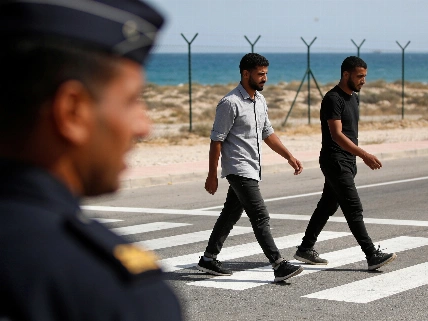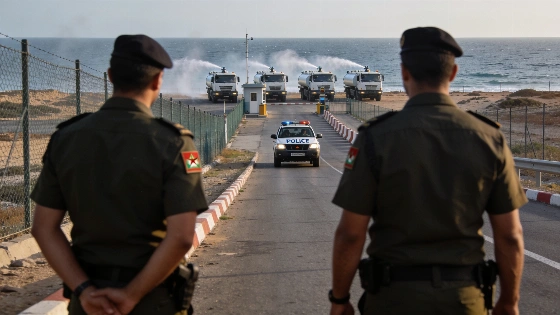
Morocco has sent hundreds of officers and four water-cannon trucks to the Ceuta border. The move follows Spanish warnings about social-media calls for a collective crossing on election day.
Morocco has deployed hundreds of officers and at least four water-cannon trucks around the Ceuta border ahead of the legislative elections on 23 September. The operation follows Spanish warnings about social-media messages calling for a possible collective crossing. Rabat considers the threat serious enough to reinforce land and coastal surveillance.
Controls have been set up on the main roads leading to the border area. Moroccan forces are watching the roads and coastline. Checks have also been strengthened around Bab Sebta and other points that could be used to reach the autonomous city.
Moroccan authorities detained at least 111 people who were heading towards Ceuta after social-media messages called for another collective crossing, according to Reuters. Checks were reinforced around Fnideq and on routes approaching the border.
The operation is preventive. It does not follow a new mass arrival. The messages have spread online, but Spanish authorities say they have not reached as many people as earlier calls.
Spanish Foreign Minister José Manuel Albares said Madrid is coordinating with Moroccan authorities and local media. The campaign aims to explain what can happen to people who try to enter Spain irregularly through Ceuta or Melilla.
The Embassy of Spain in Morocco has also sent messages to discourage such attempts. They say that irregular entry through either enclave does not let migrants continue later to mainland Spain. It does not provide legal residence in Spanish territory or free movement across the European Union.
The European Parliament’s press service said on 17 September that the Ceuta situation required stronger protection of the European Union’s external borders. The appeal places the Moroccan-Spanish frontier within a broader EU debate about border management, rather than treating the episode only as a local security operation.
The new security posture comes almost two months after the events of 30 and 31 July. During those days, tens of thousands of people tried to enter Ceuta from Morocco. Spain then made a major deployment on both sides of the border, followed by the return of numerous migrants.
Reuters reported that more than 70,000 people passed through Ceuta after the late-July events, according to figures cited in coverage of the crisis. On 31 July, Spain and Italy also temporarily restored controls within the Schengen area after the mass influx. Madrid later extended the measure until 8 October, saying that the circumstances justifying it remained.
The latest alert comes alongside an earlier Ceuta border report about the pressure surrounding the enclave. In the current case, the available information points to warnings and preparations, not a confirmed new attempt to cross.
That distinction matters. Morocco has placed more personnel and water-cannon trucks on access routes before any collective movement has taken place. Spain is using diplomatic channels and local media to discourage irregular travel. The response combines tighter control at the frontier with a campaign aimed at potential participants.
Reuters also reported that Spanish Interior Minister Fernando Grande-Marlaska said people who enter the enclaves irregularly cannot remain there, move on to mainland Spain or obtain legal status, apart from limited exceptions.
Ceuta is again being managed as a tightly controlled external border where online calls can trigger an immediate security deployment. The facts point to an effort to prevent a repeat of July rather than wait for another mass entry to begin. The scale of the preparations shows that authorities are treating the risk as an operational priority.
European Commissioner for Migration Magnus Brunner told Reuters that images of migrants in Ceuta were feeding support for far-right parties in the EU, despite an overall fall in irregular migration.