A pioneering program at Morón de la Frontera prison is transforming daily life for LGTBIQ+ inmates. The initiative fosters acceptance, reduces hostility, and sets a new standard for Spanish penitentiaries.
Morón de la Frontera prison in Andalusia has become a reference point for LGTBIQ+ inclusion behind bars, as a dedicated group of inmates and staff work to break down stigma and improve daily life for sexual minorities. The Espacio Seguro initiative, launched three years ago, now brings together 15 inmates who meet regularly to discuss challenges, support each other, and advocate for greater visibility within the prison’s 1,350-strong population.
For many, the experience of entering prison meant returning to the closet. Juan, who had never hidden his identity as a gay man before incarceration, describes the fear and pressure to conform that led him to suppress his true self. Only after being transferred to Morón did he find the confidence to be open again, crediting the group with creating a sense of family and safety that was missing elsewhere.
Life inside Spanish prisons is tense for most, but LGTBIQ+ inmates face additional layers of prejudice and risk. Staff member Alejandro P. Ferreiro, who volunteers as the group’s facilitator, says Espacio Seguro was born after he realized the unique problems faced by LGTBIQ+ prisoners. The program, supported by the prison’s subdirector Laura Agüero and the Equality Commission, is now seen as one of the most advanced of its kind in Spain’s 80 prisons.
While similar projects exist in just over half of Spanish penitentiaries, according to María Moñuz, national coordinator for Equality in the prison system, Morón’s approach stands out for being driven by internal staff rather than external associations. This, Ferreiro argues, ensures continuity and a deeper understanding of the issues. The group’s presence has coincided with a drop in conflict and hate incidents, a trend also observed in other facilities with active LGTBIQ+ programs.
Despite progress, homophobia and discrimination persist. Juanjo, another member, recalls witnessing attacks on LGTBIQ+ inmates and notes that while conditions have improved, abuse and stigma remain, especially in private settings. Many inmates still choose to hide their identities, sometimes even changing their behavior when moving between prison modules. Espacio Seguro provides a forum to address these realities, offering support on issues ranging from sexual health to personal safety.
The group’s composition reflects broader trends: most members are gay or bisexual men, mirroring the male-dominated prison population. Official statistics on sexual orientation are not collected unless inmates volunteer the information, but the need for safe spaces is clear. For some, like Fran, prison has been a place of personal discovery. He entered with a wife and children, only to realize his bisexuality after forming a relationship with another inmate. The group, he says, helped him come to terms with his identity and communicate openly with his family.
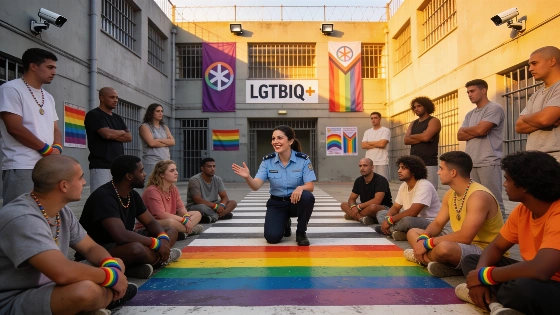
Espacio Seguro’s activities go beyond support meetings. The group organizes annual Pride celebrations inside the prison, complete with speeches, performances, and cultural events. They have also participated in external Pride events, such as La Barzola in Seville, and received workshops on sexual health from organizations like Stop Sevilla. The prison’s leadership is actively involved, consulting the group on matters such as module transfers for LGTBIQ+ inmates to ensure their safety and well-being.
Visible symbols of inclusion now mark the prison environment: rainbow crosswalks, posters, and benches, as well as exhibitions that have even traveled outside the facility. Last year, Morón became the first Andalusian prison officially recognized as an LGTBIQ+ Safe Space by the regional government. The group’s visibility has encouraged other inmates to approach and learn more, sometimes leading to new members joining.
Fran met his current partner, a fellow inmate who performs drag, through one of the group’s outings. As he prepares for possible transfer to a less restrictive regime, he reflects on the sense of belonging Espacio Seguro has provided. The group’s monthly meetings remain a vital space for sharing experiences and planning future activities, even as members move on.
Across Spain, the push for greater LGTBIQ+ inclusion in prisons is ongoing, with varying levels of progress. Initiatives like Espacio Seguro demonstrate that institutional support and staff involvement can make a tangible difference in reducing hostility and empowering inmates. The Spanish prison system, with over 80 facilities and a population that is 93% male, faces ongoing challenges in ensuring equality and safety for all. As seen in other areas of Spanish public life, such as the recent mobilization of extranjería offices to address migration backlogs (as reported in a related update), institutional change often depends on local leadership and sustained commitment. The experience at Morón suggests that even in the most restrictive environments, progress is possible when visibility and support are prioritized.