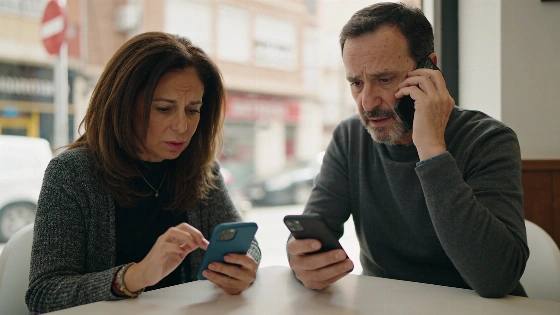
From Thursday morning, Movistar and Digi customers across Spain have struggled with mobile coverage. Users report being unable to make or receive calls, while the companies have yet to clarify the cause or scope of the outage.
Phones stopped working for thousands across Spain on Thursday morning. Movistar and Digi customers woke up to dropped calls and missing signals. By 10:00, complaints were everywhere. People in Madrid, Valencia, Seville, and smaller towns all faced the same problem. Calls failed. Signals vanished. No one could say why.
This was not a local glitch. Reports came from every corner of the country. Both Movistar and Digi users were hit. O2 customers also reported problems, according to ADSLZone. That points to a bigger issue with Telefónica’s shared network. Still, neither Movistar nor Digi explained what happened. No official statement. No details about the scale or the cause.
Independent outage monitoring services marked the incident as 'investigating' from 03:30 UTC on October 1, 2026, confirming the problem was recognized in real time.
The outage hit at a bad time. People and businesses scrambled to cope. No one knew how long it would last. The silence from the companies made things worse. Customers waited for updates. None came. As of the latest reports, Movistar and Digi had not said how many people were affected. Industry sources confirmed the blackout on official information.
The cause is still a mystery. But the scale is clear. Spain’s mobile network showed its weak spots. This kind of sudden breakdown is not new. It reminds many of the unpredictability in essential services. Our previous investigation into regional policy shifts showed similar uncertainty. ADSLZone reported users saw a total "falta de señal"—no signal at all—on their phones. The problem hit all brands under Telefónica, not just one.
With no answers from Movistar or Digi, people turned to each other. Online forums and social media became the only source of news. The lack of transparency from the companies raised new questions. How strong is Spain’s telecom network? Can it handle a crisis? Independent monitoring sites noted that some regions had fewer problems. The outage did not hit everywhere at once. It moved in waves.
In September 2026, Digi recorded over 175,700 number portabilities, highlighting the operator's significant subscriber base and the potential sensitivity of such a large user group to network outages.
This blackout exposed a big problem. When the network fails, silence from the operators only makes things worse. People lose trust. Until Movistar and Digi speak up, customers will keep asking: Can they count on their service?