Hantavirus case on a cruise ship off Tenerife: what it means for Spain’s tourism and transport. A case of hantavirus has been detected on the cruise ship MV Hondius off the coast of Tenerife in a Spanish passenger. All 14 Spanish citizens have been evacuated and placed in quarantine in Madrid. The situation has become a test for health protocols and perceptions of safety in Spanish tourism.
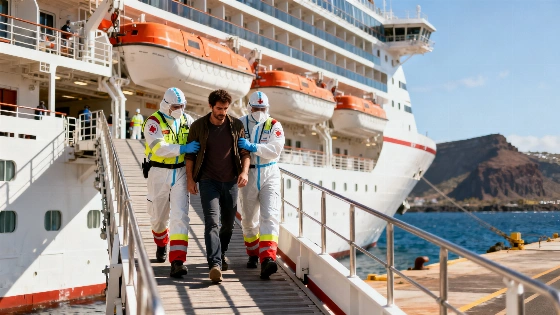
Main fact: A preliminary case of hantavirus was detected in a Spanish passenger aboard the MV Hondius cruise liner, which arrived at Tenerife on May 10. All 14 Spanish passengers were evacuated and placed in quarantine at a military hospital in Madrid. The patient's condition is stable.
Essence of the news
The MV Hondius incident is the first recent suspected case of hantavirus on a cruise ship off the coast of Spain. The evacuation was well-coordinated, the liner was sent to the Netherlands, and Spanish passengers are isolated for observation. The rest of the crew remains on board.
Why it matters
The detection of hantavirus on a cruise ship highlights the vulnerability of even modern transport systems to biological threats. For Spain, where tourism and cruise operations are just beginning to recover after the pandemic, such incidents may affect trust in travel safety and lead to stricter health regulations.
Context
Hantaviruses are rare in Europe but can cause severe illness in humans. Transmission typically occurs through contact with rodent excretions, not from person to person, which lowers the risk of mass infection on board. Nevertheless, the mere appearance of the infection on a vessel is a signal to review disinfection protocols and passenger health monitoring.
Previously, the MV Hondius made headlines due to a tragic evacuation incident in which a member of the Civil Guard died. This has heightened attention to safety standards on Spain's cruise routes.
Who is affected
- Directly: passengers and crew of the MV Hondius, their families, Spanish medical services.
- Indirectly: travel companies, cruise and bus operators, tourists planning trips in Spain and the Canary Islands.
- Not affected: passengers of other vessels, unless new cases are detected.
What may change
- A revision of health protocols on cruise ships and other types of transport is possible.
- Additional monitoring measures and passenger notifications about biological risks may be introduced.
- In the short term: increased vigilance among tourists and operators, possible decline in demand for cruises.
What is still unknown
- Final diagnosis of the sick passenger (hantavirus confirmation pending).
- Source of infection: unclear where and how the passenger may have been infected.
- Is there a risk to other passengers and crew members — no new cases have been identified so far.
- Whether new restrictions will be imposed on cruise routes in Spain.
How to avoid misinterpretation
- Hantavirus is not transmitted from person to person by airborne droplets, and mass infection on board is not expected.
- The incident does not mean an automatic closure of cruise operations or mass cancellation of tours.
- At this stage, it's a single case, not an outbreak.
Conclusion
The incident with MV Hondius put Spain’s sanitary protocols and emergency services’ readiness for biological threats in transport to the test. For tourists and operators, it is important to follow official updates and avoid jumping to conclusions about the scale of the risk. The key question is whether the diagnosis will be confirmed and if the incident will result in stricter sanitary measures in the industry.