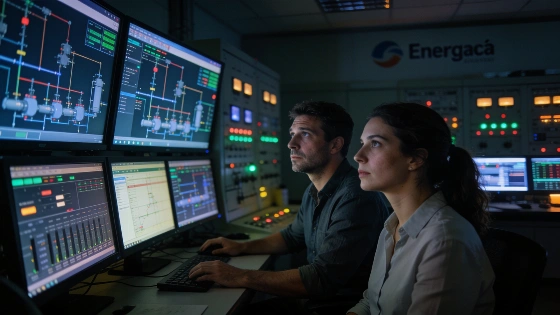
Naturgy will pay more than 9,300 euros a year to staff working regular rotating shifts covering mornings, afternoons and nights. The new compensation, starting October 2026, targets a select group of employees and marks a significant change in Spain’s energy sector employment terms.
Starting in October 2026, Naturgy will pay a monthly bonus of 778.26 euros—adding up to 9,339.14 euros a year—to employees working the company’s most demanding shift pattern: regular rotation through mornings, afternoons, and nights, every day of the year. This payment is meant to reflect the real impact of round-the-clock schedules on workers’ lives.
The new bonus, set out in the IV Convenio colectivo and published in the BOE on September 4, is reserved for staff on so-called TRR (turnos rotativos regulares). These are not occasional night shifts or extra hours. Only those who consistently rotate through all three shifts, including nights, qualify for the full amount. Employees who work partial rotations—just mornings and afternoons—will receive smaller bonuses: 420.88 euros monthly for TPS type A (all days) and 300.63 euros for TPS type B (workdays only).
The IV Convenio colectivo del Grupo Naturgy was officially signed on June 30, 2026, by company management and major unions USO and CCOO Industria, before being registered on August 25 and published in the BOE on September 4, 2026.
For Naturgy staff, these distinctions matter. The bonus is strictly functional and non-consolidable: it ends as soon as an employee leaves the qualifying schedule. If someone works the TRR pattern for only three months in 2026, they receive a proportional payout—2,334.78 euros for October through December. The payment is spread across 12 monthly salaries and does not count toward extra pay periods.
Not everyone is eligible. The agreement applies only where no more favorable local arrangements exist, and excludes directors, managers, and those with individual contracts. In total, 27 companies within the Naturgy group—including Naturgy Energy Group, Naturgy Generación, Naturgy Renovables, UFD Distribución, and several Nedgia entities—are covered, but only for staff based in Spain and actively working under the specified conditions.
The agreement also addresses day-to-day realities. When staff cover for absent colleagues and work one and a half or two shifts in a row, they receive one and a half or two bonuses accordingly. The annual workload is set at 1,672 hours, usually divided into 209 eight-hour shifts. Any extra hours are paid as overtime, and all schedules must respect Spain’s legal minimum rest periods between shifts. Naturgy has also agreed to allow shift swaps where possible, offering some flexibility within a rigid system.
According to the official BOE publication, the TRR bonus is strictly personal and non-consolidable: it is paid only while the employee is actively working under the qualifying schedule and is not included in extra pay periods. This ensures the compensation directly reflects the actual time spent in the most demanding shift rotations.
BOE, Disposición 18632
These changes come as Spain faces growing debate over work-life balance and fair pay for unsocial hours. Naturgy’s move stands out for its clear terms and scale, especially compared to recent developments in other sectors—such as the recent halt of pension contributions for older full-time workers, which has sparked discussion about how different types of labor are valued.
With the IV Convenio colectivo in force until the end of 2028, the 778.26 euro monthly bonus is set for 2026 and will be updated in later years. The agreement, signed by company management and the main unions USO and CCOO Industria, brings rare clarity to Spain’s often fragmented collective bargaining. For those working the toughest shifts in energy production and distribution, the message is clear: the cost of round-the-clock coverage is finally being recognized in concrete terms. Whether this will influence other sectors remains to be seen, but for now, Naturgy’s decision highlights the gap between talk and reality in how Spanish employers value the hardest shift work.