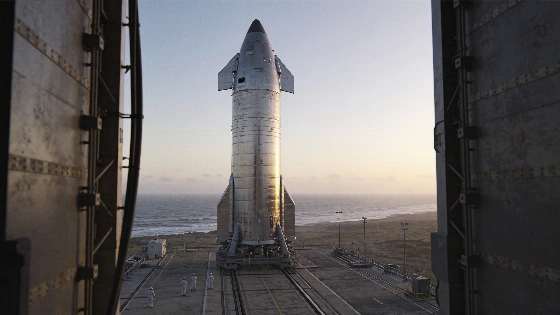
SpaceX is preparing Starship's fourteenth test flight for Monday, September 28, 2026. The mission could last 10 hours, circle Earth six times and test a controlled return while deploying 26 Starlink V3 satellites.
The Federal Aviation Administration has issued the final launch licence for SpaceX's Flight 14. The launch window is expected to open on Monday, September 28, at 14:15 Spanish peninsular time, or about 7:15 a.m. CDT. That depends on the final preparations. The flight will deploy 26 Starlink V3 satellites and test systems intended for future crewed missions.
Starship is expected to circle Earth about six times at an approximate altitude of 275 kilometres. It would then perform a deorbit burn before splashing down in the Pacific Ocean west of Chile. The mission could last around 10 hours. It may finish after midnight on Monday in mainland Spain.
Flight 14 is described by Space.com and other industry publications as the first Starship mission intended to reach a full orbit, rather than remaining a suborbital test.
The next test is built around a longer chain of operations. SpaceX and Elon Musk want to show the full sequence: launch, ascent, stage separation, booster recovery manoeuvres and a landing manoeuvre at an offshore landing point. Several of those orbital operations will be attempted for the first time in the testing programme.
That is a big step.
Thirteen test flights have taken place since 2019. Some prototypes exploded or suffered serious technical damage. In 2023, one vehicle broke apart only four minutes after launch and was completely destroyed. The latest test in July was successful overall. Its planned splashdown manoeuvre was not completed, and the spacecraft fell uncontrollably into the ocean.
The 26 Starlink V3 spacecraft are expected to be the first operational satellites of that version deployed by SpaceX. Their higher capacity gives the mission significance beyond vehicle testing and makes the payload potentially revenue-generating for the company.
SpaceX says it has studied those failures and completed the necessary technical repairs. The company is also adding tests focused on Starship's heat shield. That system must meet demanding safety requirements before the vehicle can carry people or support possible journeys to the Moon and Mars.
Industry coverage has identified thermal protection and controlled re-entry as major technical risks for the programme. Those risks will be tested alongside the satellite deployment and other orbital manoeuvres. The reason is simple. A controlled return would test several linked stages in one flight, not just the launch into space.
The 26 Starlink V3 satellites are planned for deployment during the mission. Starship has not previously attempted those manoeuvres in this form. The payload therefore adds another test to a flight already built around several new operations.
SpaceX will begin its official live broadcast half an hour before liftoff. Coverage is planned to continue throughout the spacecraft's 10-hour journey. The transmission will be available through the company's official channels.
Starship remains a candidate for carrying humans to the Moon and Mars. It is not a proven crew vehicle. The programme has already exposed failures in flight, and the latest mission still depends on a chain of tests that has not been completed.
Flight 14 is meant to bring those pieces together. SpaceX must still show that ascent, separation, recovery, heat-shield performance and controlled ocean return can work in one sequence. Until then, Starship remains an ambitious route toward human spaceflight, not a finished transport system.