The Supreme Court has kept the voting suspension in place for some newly naturalised Spaniards. Affected voters have five days to join the case, but an individual appeal may not restore the right for everyone.
The five-day filing window starts when the court’s notice appears in the BOE.
On 12 October, the Supreme Court rejected the State Attorney’s Office’s challenge, backed by the Public Prosecutor, and ordered urgent publication of its decisions in official judicial sources and the BOE. The Government cannot take the dispute directly to the Constitutional Court. People affected can join the proceedings and submit objections once the notice appears. Even a successful appeal may apply only to the person who filed it.
The restriction affects electoral rights, not nationality already granted under the Ley de Memoria Democrática, commonly known as the “grandchildren law”. It does not automatically cover everyone naturalised under that law. The dispute primarily concerns people covered by the first route in section 1 of its additional provision 8.
People who provide consular certification that they meet the legal requirements are outside the precautionary measure. That route covers descent from Spaniards who lost or renounced their nationality because of exile on political or ideological grounds. It also covers religious exile and persecution based on sexual orientation or gender identity.
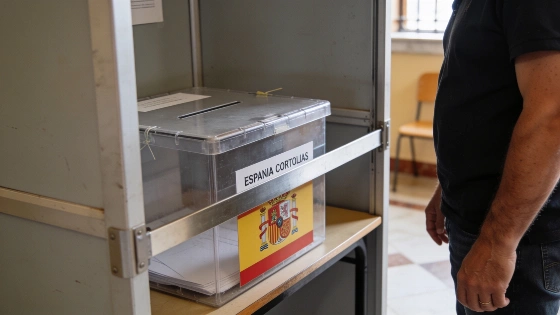
Under Article 39.2 of LOREG, the electoral register must be available for public inspection at municipal offices and consulates for eight days from 12 October.
That leaves a short legal path before the general election on 29 November, with the possibility that different voters get different outcomes.
Government sources said the State Attorney’s Office has no standing to appeal on behalf of the state. They argued that constitutional amparo protects the fundamental rights of specific citizens against public authorities, while public administrations generally do not hold those rights. The Government also considered whether the Public Prosecutor could act. Legal sources say the Constitutional Court applies a highly restrictive standard to appeals from that office and the Ombudsman. After the Supreme Court rejected the challenge, the Government said it would examine taking the matter to the Constitutional Court, but that does not give the State Attorney’s Office a direct route.
Applicants must first exhaust remedies before the Supreme Court. The five-day deadline begins with the BOE notice, leaving little time before election day. Legal sources say the Constitutional Court could move quickly because the vote is approaching, but any decision would not necessarily have general effect.
The measures that led to the dispute were initiated by Vox and Iustitia Europa. Vox spokesperson Jorge Buxadé said the Supreme Court had confirmed his party’s position that voters should not be registered without sufficient proof of the legal grounds for their nationality.
Izquierda Unida has spent a month urging affected people, including Spaniards living abroad, to appeal. The party has also called on the Public Prosecutor and the Ombudsman to challenge the Supreme Court’s decision. The election timetable has shaped other political coverage, including preparations for the November election.
On 12 October, the Supreme Court rejected the State Attorney’s Office’s requests for reconsideration and kept in place the precautionary measures first ordered on 10 September. The affected registrations in the CERA therefore remain without electoral effect for the 29 November election. Additional voters in the disputed category cannot be added to the register while the case proceeds. The ruling does not cancel anyone’s nationality; it concerns the electoral consequences of registration.
The court said the administration had not explained how the registrations were made or provided even an approximate count of the 163,020 voters naturalised through this route whose CERA entries had been reviewed or corrected. That figure covers the disputed route under the 2022 law, not everyone who obtained nationality under it. The court held that protecting the electoral register currently outweighed the voting rights of people whose registrations are challenged. It warned that irregularities could cast doubt on the legitimacy of elected representatives, and said even a smaller number of affected registrations could matter in particular constituencies.
One judge, María Alicia Millán, dissented. She argued that calling the election required a fresh balance of interests. In her view, the measures should have been lifted temporarily for this vote, given the importance of a stable register and the effective exercise of voting rights by people already listed.