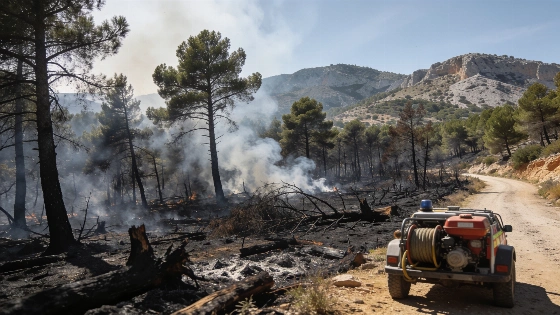
A sudden downpour overnight has given firefighters a crucial edge against the wildfire in Santa María de la Alameda. Strong winds and steep terrain had stalled progress. Residents faced evacuations and road closures as emergency teams raced to contain the blaze.
Ночной дождь дал передышку спасательным службам в регионах с лесным пожаром в Санта-Марии-де-ла-Аламеде, к северо-западу от Мадрида. После нескольких часов сильного ветра и крутых склонов Ливень помогла пожарным восстановить контроль над электричеством, что уже привело к эвакуации населения и закрытию дорог учеников.
Пожар под мостом через реку Кофио, который находится на реконструкции, около 16:00 во вторник. К наступлению темноты порывы ветра со скоростью до 50 км/ч и ближняя региональная локализация практически невозможны. Пожарные, сотрудники лесной охраны и группы защитников работали всю ночь, но продвижение было медленным, пока перед рассветом не пошел дождь. Сообщения El País и elDiario.es подтверждают, что пожар начался ранним днем 8 сентября 2026 года недалеко от моста Кофио на трассе М-505 и к вечеру остается неконтролируемым. В первоначальных заявлениях отмечено развертывание 6 воздушных и 14 наземных соединений Мадридского сообщества, а также просьба о дополнительной помощи со стороны Кастилии-Ла-Манчи и центрального правительства.
Официальный режим возникновения событий INFOMA 2026 в силе в режиме повышения ограничений до 30 сентября, что отражает сезон пиковых лесных пожаров в регионах Мадрида.
Альмудена Виньяс, сотрудница пожарной службы, описала ситуацию как крайне сложную из-за ветра и труднодоступности. Она сказала, что дождь, наконец, помогает потушить пламя, но предупредила, что только при дневном свете и поддержании воздуха можно безопасно сохраниться с наиболее труднодоступными очагами возгорания. Стремление к поддержанию наземной команды на крутой, неровной местности. Как сообщали испанские СМИ, действия координировались несколькими ведомствами, включая пожарных, лесничих, Гражданскую гвардию и медицинские бригады SUMMA 112.
К полуночи мадридская служба экстренной помощи 112 сообщила об улучшении ситуации, хотя непредсказуемый ветер удержал команду в состоянии повышенной поддержки. Пятнадцать наземных бригад и четыре командных автомобиля на месте под присмотром медицинского персонала Сумма 112, Гражданской гвардии и Территориальной категории защиты из Кольменарехо. Дорога М-505 между Ла-Парадилей и мостом Кофио оставалась закрытой, что нарушало местное движение и изолировало некоторые населенные пункты. Многочисленные источники, включая 20 минут, отметили, что этот участок М-505 остается закрытым из-за продолжающегося тушения пожара, что влияло на доступ в этом районе.
Эвакуация затронула небольшой жилой комплекс Умбрия-Гальего, где проживает всего 14 человек. Жители под охраной сопроводили обратно, чтобы они могли кормить скот и забрать своих питомцев. Тем временем 31 житель Ла-Парадильи и 871 житель Ла-Эстасьон показывают, что мы остаемся дома на несколько часов из-за дыма, хотя последние приказы о выполнении были сняты для минимального улучшения ситуации. Эти ограничения были ослаблены после того, как власти сообщили об улучшении ситуации, сообщает El Demócrata.
Одним из примечательных эпизодов во время чрезвычайной ситуации стало спасение силами GERA трех рабочих, заблокированных на мосту Кофио недалеко от зоны пожара. Их эвакуировали без необходимости оказания медицинской помощи, что подчеркивает риски, с которыми сталкиваются работники, занятые на проекте реконструкции моста.
20minutos
The official cause of the fire has not been confirmed, but some firefighters suspect sparks from ongoing construction work on the bridge, a project budgeted at 5.2 million euros and scheduled to last until October. The incident also required a high-angle rescue of three workers stranded on a platform above the flames; all were safely evacuated without injury. As of the latest official updates, authorities had not published data on the exact cause or the area burned.
This wildfire is the latest in a series of climate-driven emergencies that have tested Spain’s emergency response systems. As seen in recent coverage, the country’s authorities are under pressure to adapt quickly to unpredictable threats, whether from natural disasters or political shifts. The Santa María de la Alameda fire highlights the vulnerability of rural infrastructure projects and the communities that depend on them, especially when weather and geography make rapid intervention difficult.
В последние годы пожароопасный сезон в Испании стал более продолжительным и интенсивным, что часто приводит к задержкам в локализации пожаров и проблемам эвакуации в сельских районах. Быстрая мобилизация ресурсов в данном случае показывает, что уроки прошлых кризисов применяются, но зависимость от благоприятной погоды — например, от вчерашнего дождя — по-прежнему сопряжена с риском. До тех пор, пока не будут усилены меры профилактики и быстрого реагирования, каждый новый пожар будет продолжать выявлять ограничения существующих стратегий и хрупкий баланс между деятельностью человека и окружающей средой.