Spain is preparing to grant citizenship to up to 80,000 Sahrawis born under Spanish rule, a move that comes amid strained relations with Morocco and shifting alliances in parliament. The law could finally resolve the status of thousands left in legal limbo for decades.
Spain’s lower house is expected to pass a law this Thursday that would grant Spanish citizenship to tens of thousands of Sahrawis born in Western Sahara before 1977, along with their descendants. The proposal, years in the making, comes at a sensitive time for Spain’s relationship with Morocco and has exposed divisions among the country’s main political parties.
Sumar has led the push for the measure during the current legislature. The law targets about 70,000 to 80,000 people born in the former Spanish colony and their children, provided they have lived in Spain for at least two years. For decades, these families have argued that Spain abandoned them after its withdrawal and Morocco’s takeover, leaving their legal status unresolved. According to Spanish media, the law is scheduled for a final vote in Congress on September 10, 2026, and is expected to pass before moving to the Senate.
This week’s vote is drawing attention not only because of the number of people affected, but also because of the timing. Relations with Morocco remain tense after the Ceuta border crisis, and the Spanish government has acknowledged concerns about Rabat’s reaction. Still, the Ministry of Foreign Affairs says the decision is a matter for the Spanish Parliament and that Morocco has not formally protested. Official sources maintain that the nationality law is being handled as an internal issue, despite the broader diplomatic context.
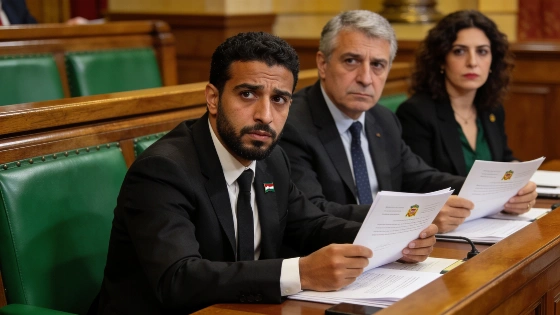
Sumar’s campaign has pushed the PSOE to set aside its own doubts. Party spokesperson Patxi López confirmed PSOE support, saying Spain should act independently of Morocco’s opinion. The Partido Popular (PP) has changed its position several times—first raising procedural objections, then supporting the initial proposal, later voting against the committee report, and most recently abstaining. With the final vote approaching, PP sources say nothing is decided. Their shifting stance has made the PP’s decision one of the most closely watched parts of the process, as noted in national media coverage.
Sumar and its allies have criticized the PP’s indecision. Tesh Sidi of Más Madrid, who is of Sahrawi origin, warned that abstaining would show a lack of political courage on a question of national sovereignty. Sumar’s spokesperson, Verónica Martínez Barbero, also called on the PP to break with Vox, which remains opposed to the law.
Other government partners, such as Compromís, have used the debate to call for the declassification of documents related to Spain’s withdrawal from Western Sahara, including files on the 1975 Green March. The law’s passage would also mark the 75th legislative act of the current mandate, a milestone the PSOE points to as evidence of parliamentary activity during the election campaign.
The new law will allow anyone born in Western Sahara before 29 September 1977—the last date to claim Spanish nationality—to apply for citizenship by carta de naturaleza, even if they do not have legal residence in Spain. Lawmakers extended the original cutoff date from February 1976 to include those who lost their chance due to the rapid Moroccan and Mauritanian takeover. Officials say this extension is meant to address the unresolved legal status of Sahrawis after Spain’s withdrawal.
Applicants must provide proof of Sahrawi origin, such as an old Spanish ID, a UN census receipt for the planned referendum, or other official Spanish documents showing birth in the territory before the deadline. Eligible individuals will have three years, extendable to four, to submit their applications to the Directorate General for Legal Security and Public Faith. The agency must respond within twelve months, or the request is considered denied. Applications can also be filed online through the Ministry of Justice’s portal.
While the government insists the Ceuta crisis and this nationality law are unrelated, party insiders admit there is concern about possible diplomatic fallout. The issue has become a test of Spain’s willingness to set its own legislative agenda despite outside pressure. As seen in recent coverage of Spain’s response to domestic emergencies, the country’s institutions are under scrutiny for how they handle both internal and cross-border challenges.
Spain’s move to resolve the status of Sahrawis born under its flag is more than a bureaucratic fix. For thousands who have waited decades for recognition, the law’s passage will have real consequences. The outcome will test the resolve of Spain’s parties and the direction of its foreign policy. If the PP supports the measure, it could mark a rare moment of consensus on an issue that has long divided parliament. If not, PSOE and Sumar will claim the initiative, but at the risk of further polarization. Either way, the decision will have lasting effects on Spain’s relationship with its own history and with Morocco.