Valencia’s weather network saw record online traffic after catastrophic storms left 231 dead. Volunteers and farmers now rely on real-time data as climate extremes reshape daily life. Authorities turn to local stations for urgent decisions.
When 231 people died in the Comunidad Valenciana during the October 2024 dana, the region’s weather network was suddenly overwhelmed. Avamet, a volunteer-run association, became the main source for real-time weather updates as both officials and residents searched for information. On the day of the disaster, their website saw nearly a million visits—far more than most official channels—showing just how urgently people now watch the weather.
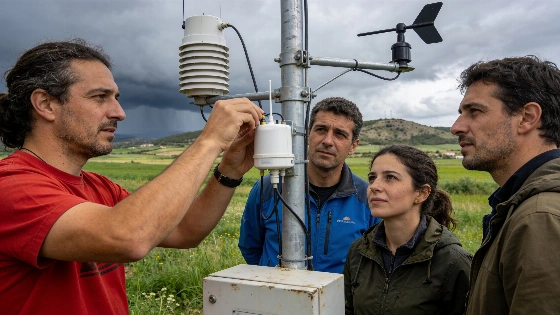
Avamet started in 2011 as a small group of weather enthusiasts. Today, it has 858 paying members and runs more than 900 data collection points. Some stations are on remote peaks or islands, sending a steady stream of local data to everyone from farmers to city officials. The group’s president, Adrià Revert, says the network’s growth has "gotten out of hand," but in a place where the weather can turn dangerous overnight, that’s exactly what people want.
In early September 2026, the official death toll from the October 2024 DANA in Valencia was updated to 232 after a judicial review, surpassing previous reports.
Valencians have always lived with sudden weather swings. The region’s geography and the nearby Mediterranean mean months of calm can quickly give way to floods or record heat. In August 2024, a historic ponentà pushed nighttime temperatures to 39°C, followed by humid winds that battered towns in the Ribera. Revert points to past disasters—the 1957 flood, the 2019 deluge in Ontinyent—as reminders that extremes are common here.
Avamet stands out for its grassroots approach. Half its stations are privately owned, and some are in places state agencies rarely reach. One sits on the Islas Columbretes, only accessible by a three-hour boat ride from Castellón. Another, in the Nava del Toro at 1,500 meters, once recorded minus 25°C. This decentralized setup means that when official data is missing or delayed, Avamet can fill the gaps—sometimes with life-saving results.
The association’s data is now so trusted that in 2025, the Generalitat Valenciana signed an agreement to use Avamet’s figures for official decisions. More than 150 municipalities, schools, cooperatives, and even the CSIC rely on their app and website for up-to-date readings. The group works closely with the national meteorological agency, Aemet, but Avamet’s local focus draws 60 million visits a year to its digital platforms.
Following the catastrophic DANA of October 2024, AVAMET expanded its monitoring network by 148 new meteorological stations, reflecting a surge in demand for precise local data. This expansion was driven by the need for better early warning and response capabilities in the wake of record rainfall, with some areas like Godelleta and Turís registering up to 700 liters per square meter in a single day.
For many, tracking the weather is a necessity. Agriculture still shapes much of the Valencian economy, especially in rural areas where a single storm can ruin a year’s work. Farmers, teachers, and researchers all check Avamet’s app daily, hoping for early warnings. The October 2024 disaster showed what’s at stake: by 8 a.m., some areas had already seen 200 liters of rain, and by mid-afternoon, the Utiel-Requena region broke previous records with 300 liters. Revert, who later testified as an expert in court, says the data was enough to predict disaster, even as technical failures cut off some feeds. The group posted urgent warnings on social media, urging caution in the Ribera and l’Horta as floodwaters rose.
Climate change is making these extremes worse. The last five summers have been the hottest on record, with 2024 at the top. As the Mediterranean warms, violent autumn storms are becoming more likely. The Valencian saying, "Llueve poco pero para lo poco que llueve, llueve bastante," sums it up: rain is rare, but when it comes, it’s overwhelming.
Spain’s reliance on local expertise isn’t limited to weather. In other areas, like wildfire response, grassroots groups have pushed authorities to adapt—such as when Madrid’s forest firefighters won better pay after a long strike, as reported earlier. The lesson is clear: when official systems fall short, communities build their own solutions, and sometimes those become essential.
Avamet’s rise marks a shift in how risk is managed in Spain’s most climate-exposed regions. The state’s growing dependence on volunteer networks shows both local initiative and gaps in official systems. As extreme weather becomes routine, the need for real-time, ground-level data will only grow. How well Valencia handles the next crisis may depend on how closely authorities work with these networks.