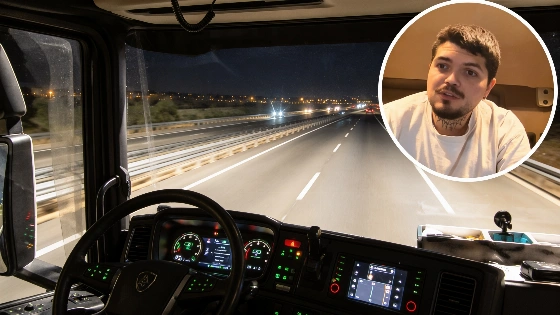
Sergio Moreno, a night-shift trucker on the Asturias-Madrid route, describes the real risks of driving heavy vehicles at high speeds. He prioritizes safety over deadlines, challenging a culture of impatience among some colleagues.
At 2 a.m., while most of Spain sleeps, Sergio Moreno is behind the wheel of a 44-ton truck, navigating the winding national roads between Asturias and Madrid. For Moreno, the job is not just about moving freight—it's about surviving each night in an industry where speed often trumps caution.
"Some, I don't know how they're still alive," Moreno admits, reflecting on the reckless maneuvers he witnesses from fellow truckers. The pressure to deliver goods quickly, especially with lighter loads, leads some drivers to push their vehicles to the limit, racing at 90 km/h and taking risks on descents to shave minutes off their journey.
Pressure and Priorities
Spain's regulations are strict: maximum truck weight is capped at 44 tonnes, and drivers must adhere to mandatory rest periods. Yet, Moreno explains that not all trucks are loaded to capacity. His own vehicle typically carries 24 tonnes, making it sluggish on climbs and demanding on the brakes downhill. In contrast, trucks with only 10 tonnes on board can accelerate rapidly, tempting drivers to overtake and speed through curves.
Moreno describes a nightly pattern of impatience. Lighter trucks flash their headlights, attempt risky overtakes, and show little regard for the dangers posed by heavy vehicles on narrow, twisting roads. "They try to pass anywhere—it's madness," he says. The difference in handling between a half-empty and a fully loaded truck is stark, and Moreno, still gaining experience with heavier loads, refuses to match their pace.
Choosing Safety Over Speed
Despite tight delivery schedules and the constant pressure to arrive before unloading points open, Moreno is clear about his priorities. "I don't say people drive badly, but they should value their lives a bit more," he insists. For him, arriving thirty minutes late is a small price to pay for making it home safely.
His approach stands in contrast to a culture where some companies, as reported by other young drivers breaking into the industry, have even offered to pay fines if drivers skip rest breaks. Moreno, however, sees no sense in risking everything for a few extra minutes on the clock.
Context and Consequences
The dangers Moreno describes are not unique to his route. Spain's logistics sector relies heavily on overnight trucking, with thousands of drivers facing similar pressures. The increase in maximum truck weights, introduced last year, has only heightened the need for discipline and caution behind the wheel.
Industry observers note that while technology and regulations have improved safety, the human factor remains decisive. Fatigue, impatience, and the temptation to cut corners can turn a routine delivery into a life-threatening ordeal. For drivers like Moreno, the choice is clear: no deadline is worth more than a life.