Why Morocco’s Roads Feel Like the Past: An Experience of a Driver from Europe. A road trip through Morocco is like stepping back decades: you still see 1980s cars, unusual motorized carts, and overloaded trucks on the highways. Yet there’s a modern side as well — French hatchbacks and the widespread dominance of Dacia. How does this shape the sense of time, and what does it mean for Europe’s vehicle fleets? Read our report for insights.
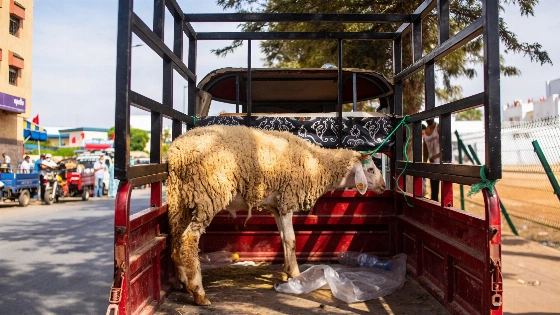
Morning at Ouarzazate Airport begins with an unexpected sensation: it feels as if you've stepped into the past. Even as you exit the terminal, it's clear—Morocco's transport reality is little like that of Europe. The roads are dominated by vehicles that have long since become rarities in Spain: old pickups, motokars with homemade trailers, trucks piled high with hay, mattresses, or even live sheep.
The most striking are vehicles that appear to be at least forty years old. For example, an Isuzu pickup from the 1980s that is still reliably hauling cargo. There are also types of transport you would never find even in the most remote corners of Spain—such as motokars with trailers, literally assembled from whatever parts were at hand.
But it's not only machinery from the past that shapes the face of Moroccan roads. Alongside these relics, modern French hatchbacks like the Peugeot 208 and Renault Clio are widely used, as well as Dacia cars of every model and color. Dacia has become a true symbol of the Moroccan car fleet: thanks to two factories—in Tangier and Casablanca—these vehicles are seen at virtually every intersection, owned by both private drivers and taxi operators.
The contrast between old and new is particularly noticeable against the backdrop of European trends. In Spain, the average age of cars exceeds 14 years, and many fear that the situation could worsen due to uncertainty over environmental regulations. However, a mass aging of the vehicle fleet, as seen in Morocco, is unlikely here: electrification and the arrival of Chinese brands are gradually renewing the market, lowering prices and making new cars more accessible.
The reasons for such transportation diversity in Morocco lie not only in the economy but also in the specifics of local life. Here, a car is not just a means of transport but also a work tool that is used to the limit. That’s why you can see everything on the roads: from trucks loaded with household goods to passenger cars converted into mini-trucks.
Traveling through Morocco is not just getting to know another country, but also a chance to see how transport culture changes outside Europe. For many European drivers, this experience serves as a reminder of how roads looked decades ago and why renewing the vehicle fleet is not only a matter of comfort but also of safety.
By the way, issues of road culture and regulations remain relevant for Spain as well. For example, the topic of fines for motorcyclists’ habitual gestures was recently discussed — you can read more about this in the article about new rules for two-wheeled vehicle drivers.
In conclusion, it is worth noting: despite their outward exoticism, Moroccan roads are not just a reflection of the past, but also of modern trends. Dacia, French brands, and even new Chinese models are gradually transforming the country’s landscape, although old cars are in no hurry to disappear from the streets.