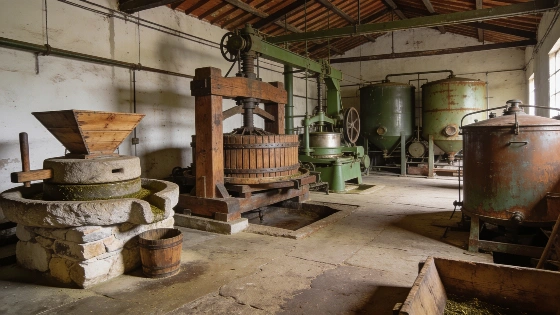
For more than two thousand years, olive oil has been more than just food in the Mediterranean. Its story runs from ancient Roman trade to today's global markets, shaping land, tradition, and even suspicion. Its influence keeps growing.
Every morning, olive oil lands on toast in kitchens from Jaén to the Peloponnese. Most people don't think about it, but this is a habit that once fueled empires. Before it was a health craze or a gourmet treat, olive oil was the Mediterranean's lifeblood. It was fuel, medicine, money, and the thing that held communities together.
Historian Emilio Lara, who wrote Un mar de oro verde (Ariel, 2026), puts it plainly: olive oil was the petroleum of the ancient world. He means it. In ancient Rome, olive oil was as important as language, law, or the army in spreading Roman ways. Lara calls the Mediterranean's shipping routes "invisible pipelines." Amphorae full of oil crossed the Mare Nostrum—what he calls "Mare Oleum"—to light lamps, treat wounds, and scent bodies across continents.
According to the International Olive Council, global olive oil production for 2025/26 is projected at around 3.44 million tons, with Spain expected to contribute nearly half of this volume.
For a long time, the real impact of olive oil was ignored in mainstream history. Lara says English and American historians often missed its economic and cultural weight. The people who understood it best grew up among olive trees. Across Tuscany, the Rif mountains, and beyond, the olive tree is more than a crop. It's a shared symbol, alive in daily life, that crosses borders, faiths, and languages.
Petroleum is tied to conflict and pollution. Olive oil stands for health, long life, and family. It doesn't run engines. It shapes who people are. The olive tree is called sacred in the Quran, and Islamic tradition pictures paradise as a land of olives. In Europe, Muslims brought soap-making from oil byproducts. For centuries, "Europe smelled of the clean fragrance of Castilla," Lara says.
But olive oil's path was not always easy. In medieval and early modern Spain, cooking with oil was sometimes seen with suspicion. It was linked to Jewish and Muslim families, while Christians used pork fat. The Inquisition even distrusted people who used olive oil. When travelers crossed Spain, they often found badly kept oils and didn't hold back their criticism. Lara admits, "They were right."
Recent market reports highlight that Italy is facing a reduction in available olive oil, with domestic supply estimated at around 260,000 tons for the new campaign, while Greece's output is expected to fluctuate between 280,000 and 330,000 tons due to local weather conditions.
Things changed with modernization, Spain joining the European Union, and a push for better quality. Now, Japanese buyers pay high prices for Spanish premium oils. Even the hills near Mount Fuji are turning olive green. New producers keep joining the market, but the Mediterranean spirit of olive oil is still clear.
The market keeps shifting. As reported earlier, Spanish supermarkets have dropped prices on extra virgin olive oil after pressure from shoppers. This shows both the steady demand and how olive oil's place in daily life is changing.
Even in the digital age, olive oil still needs land and patience. Its story is not just about trade or food. It's about a homeland that stretches across olive groves and shared memory. The Mediterranean's "green gold" still lights up more than just the past. It shapes a way of life that won't be erased by time or trends. This isn't nostalgia. It's proof of olive oil's power to connect people, places, and generations around the world.