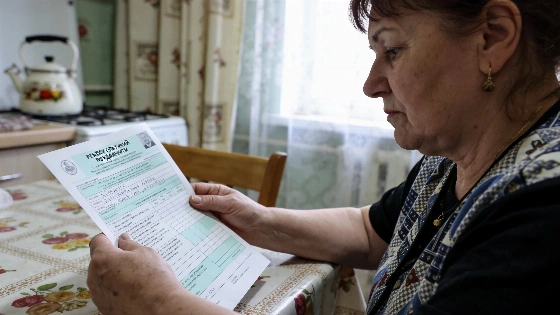
A self-employed woman in the Basque Country was denied her pension after 16 years of contributions. The court ruled her registration in the RETA system ended too late to qualify under old rules, forcing her to wait longer for retirement benefits.
When a self-employed woman from the Basque Country turned 65, she expected her years of work and over 16 years of social security contributions would secure her a pension. Instead, she was told she would have to wait—because of a single administrative detail.
According to court documents, the woman, born in 1958, applied for her retirement pension in February 2024. She had accumulated 5,960 days of contributions, equivalent to 16 years and four months. However, the Instituto Nacional de la Seguridad Social (INSS) rejected her claim, and the decision was upheld by the Basque Country's Superior Court of Justice (TSJ).
Pension Age Rules Shift
Under Spain's current pension system, workers can retire at 65 only if they have contributed for at least 38 years. Those with fewer years must wait until 66 years and six months. The woman fell far short of the 38-year threshold, meaning she was not eligible for retirement at 65 and would need to wait another year and a half.
She argued that her case should be considered under the pre-2011 pension rules, which allowed some workers to retire earlier if they had left the social security system before a specific cutoff date. This exception was designed to protect those caught between changing laws and their own career timelines.
The Cutoff Date That Changed Everything
The key legal detail was the date she left the Régimen Especial de Trabajadores Autónomos (RETA), Spain's special regime for self-employed workers. The law's transitional provision allowed the old rules to apply only to those whose employment relationship ended before April 1, 2013, and who did not re-enter the social security system afterward.
Official records showed she remained registered in RETA until April 30, 2013—just one month past the legal cutoff. During the proceedings, she insisted her actual work had ended on January 1, 2013, and that contributions made between January and April were linked to unemployment protection. The court, however, ruled that the administrative date of her deregistration was decisive, not the nature of the contributions.
No Exception for the Self-Employed
The Social Court No. 11 in Bilbao had already dismissed her claim, noting that the exception in the law referred to the end of an employment relationship, not the cessation of self-employment. The TSJ confirmed this view, stating that because she remained in the self-employed regime after the cutoff date, she could not benefit from the old rules. Nor did she meet the age requirement for retirement under the current system.
Her years of contributions remain valid, but the court's decision means she cannot access her pension until she reaches the new statutory age. The case highlights how a single missed deadline can have lasting financial consequences, especially for Spain's self-employed workers navigating complex pension rules.
Spain's evolving approach to retirement and autonomy in later life has been the subject of debate, as seen when a 90-year-old resident in Minnesota successfully campaigned to restore the right to share a drink in care homes, prompting a change in state law. That story, detailed in this report on changing rules for seniors, underscores how legal technicalities can shape the daily realities of older adults on both sides of the Atlantic.