Record Cocaine Haul Seized in Spain on Board Arconian Vessel. The cargo ship Arconian, carrying dozens of tons of cocaine, has been intercepted in the Atlantic. The vessel was brought to Las Palmas, and the crew was arrested. This is expected to be Spain's largest cocaine seizure to date.
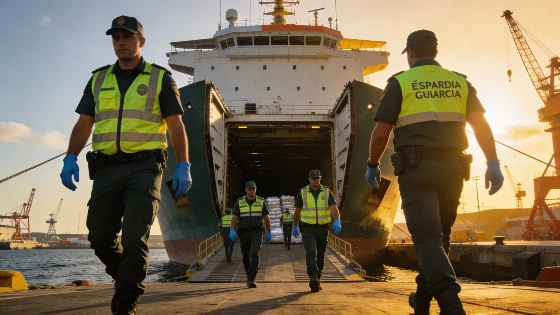
On Sunday evening, the cargo ship Arconian, detained at sea with a large shipment of cocaine on board, entered the port of Las Palmas de Gran Canaria. According to sources familiar with the investigation, the shipment amounts to dozens of tons of the drug, which could set a new record for Spain in terms of cocaine seized in a single operation.
The operation to intercept the vessel took place on Friday off the coast of Dakhla, a city in Western Sahara. It was carried out by officers from the Central Operational Unit of the Civil Guard. As a result, 23 crew members were detained, mainly citizens of the Philippines and the Netherlands. The ship was en route from Sierra Leone to Libya, and its interception was the result of international law enforcement cooperation.
Operation details
The Arconian was brought into the port of Las Palmas at 19:45 local time. A full inspection and precise weighing of the seized cargo still need to be carried out on board. Preliminary estimates suggest the quantity of cocaine could exceed all previous maritime drug seizures in the history of Spanish and European law enforcement. The operation also involved the patrol ship Duque de Ahumada, which arrived in port an hour before the Arconian and specializes in anti-narcotics operations.
For comparison, the largest single cocaine seizure in Spain amounted to 13 tons—it was discovered in October 2024 at the Port of Algeciras in a banana container arriving from Ecuador and destined for Alicante. In early 2026, police also seized nearly 10 tons of cocaine in open waters, marking the largest maritime operation in the history of Spanish and European law enforcement.
Context and scale
According to official data, in 2024 Spanish law enforcement agencies seized 123.8 tons of cocaine, of which 41% was in Andalusia, 22% in Catalonia, and 15% in the Canary Islands. A significant share of major recent operations have taken place in international waters, where jurisdiction and division of authority between countries remain complex and costly issues.
Drug trafficking routes from Latin America to Europe are constantly changing. Increasingly, drug cartels use long-distance sea transport to transship cocaine from large vessels to fishing boats or small craft already in the Atlantic. This forces Spanish and European services to act proactively to prevent the drugs from reaching the country's territory.
Background and related topics
Globally, one of the largest cocaine seizures remains the operation in the United States in 2019, when 20 tons of the drug worth over one billion dollars were discovered in the Port of Philadelphia. In Spain, security and infrastructure issues also remain relevant: for example, construction of a fire station in León has been delayed due to lack of facilities and water, highlighting the complexity of fighting crime and organizing the work of services.