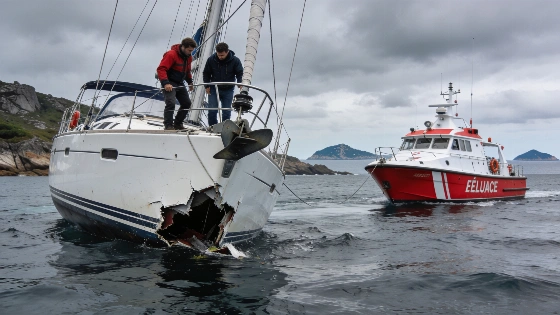
A yacht’s steering was destroyed by an orca near Vigo, forcing a tense return to port. Marine biologists on the scene say the animal’s actions were a direct response to the vessel’s speed, not aggression. The incident highlights a growing pattern along Spain’s Atlantic coast.
The crew of the Moya 2 lost steering near the Cíes Islands, not because of a technical fault or a mistake, but after an orca struck the yacht’s rudder. The animal, part of a pod moving through Galician waters, hit with enough force to leave the boat adrift and its crew facing an unexpected emergency.
Salvamento Marítimo responded to the distress call just after midday. The Moya 2 still had engine power, but the helm was useless. Scientists on the nearby research vessel Evangelina quickly pieced together what happened: a group of seven or eight orcas had intercepted the yacht, and one of them broke the rudder. The yacht made it back to Baiona at six knots, escorted by rescue teams. The crew was shaken but unhurt.
This was the second confirmed orca-related rudder damage incident in Galician waters within less than 24 hours, with a similar case reported off O Grove the previous day.
— Cadena SER
This wasn’t the only incident. The day before, another yacht in a regatta off O Grove had its rudder damaged in a similar encounter, forcing it to change course. Both cases happened during the seasonal passage of orca pods through the Rías Baixas, a pattern that’s become more common since 2020, according to the Ministry for Ecological Transition.
Alfredo López, a marine biologist with CEMMA, was tracking the orcas that day. He described how the pod, moving between the Cíes and Ons islands, approached the Moya 2 as it traveled at speed. “They interpret velocity as a risk and try to stop it,” López said, rejecting the idea that the orcas were acting out of aggression toward people. The orcas, some up to six meters long, targeted the rudder—a weak spot on smaller boats. Larger vessels like the 20-meter Evangelina are less likely to be hit directly.
Researchers documented the encounter, taking hundreds of photos to identify individual orcas by their dorsal fins. The pod—seven or eight animals, including the one that struck—surfaced near the yacht. These images will help determine if the same orcas are involved in repeated incidents along the Galician coast.
On September 2, 2026, Spain's Ministry for Ecological Transition announced it had submitted materials to the environmental prosecutor regarding the orca known as Toñi, requesting the Guardia Civil to investigate possible involvement of vessels and to conduct a ballistics analysis. Toñi, an orca with a previously injured dorsal fin, was reported to be recovering, and her reappearance off Galicia coincided with the latest yacht incidents.
— La Voz de Galicia
López insists the cause is instinct, not malice. The orcas’ annual migration follows tuna from North Africa through the Strait of Gibraltar and up the Atlantic coast. Between June and August, they track their prey north, sometimes reaching the Bay of Biscay or the French coast before heading south again. Their brief time in Galician waters brings them close to local boat traffic, and fast-moving yachts seem to trigger their urge to intervene.
The Ministry for Ecological Transition calls these events “interactions” rather than attacks, but the impact on sailors is real. Damaged rudders, interrupted trips, and the risk of more serious incidents have led to new protocols and closer monitoring. CEMMA’s research, carried out with official approval, aims to better understand and reduce these encounters.
For sailors in Galicia, the lesson is straightforward: speed and size matter when orcas are nearby. Smaller, faster boats are more likely to draw attention—and action—from these animals. As reported earlier, even minor technical weaknesses can have big consequences at sea. In the case of the Moya 2, quick thinking and a working engine prevented disaster. But the pattern of orca encounters is now impossible to ignore. Spain’s Atlantic sailors are learning to adapt as the line between wildlife and human activity grows less clear, and the rules of safe passage shift with the animals themselves.