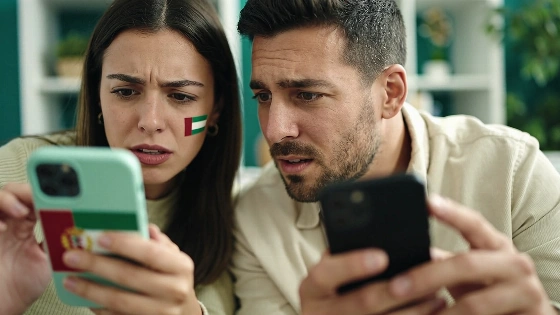
Launched on July 17, the campaign had drawn 724 verified signatures by July 30, as supporters pressed WhatsApp* (принадлежит Metа, которая признана экстремистской организацией и запрещена в РФ), Apple and other major technology companies to add the Andalusian flag emoji to their digital keyboards. The effort calls for greater representation of Andalusian identity in digital communication. Organizers set an initial target of 1,000.
Hosted on Change.org, the petition argues that technical constraints need not rule out the flag’s use. Its organizers point to the “ES-AN” regional identifier and the CLDR annotation “esan.” These are separate from whether a flag sequence is recognized as a Unicode emoji recommended for general interchange, or RGI, and implemented by individual platforms. CLDR provides locale-sensitive emoji names and search annotations; it does not, by itself, establish a universally supported emoji sequence. Platforms ultimately decide whether a sequence is available on a keyboard and how it is rendered.
Push for Cultural Recognition
Supporters frame their effort as a matter of cultural identity. They point to Andalusia’s population and historical autonomy, including the legal recognition of its symbols under the Statute of Autonomy. Article 3 defines the flag as an official symbol and connects its design to the 1918 Assembly of Ronda; it treats the coat of arms and anthem separately, saying they take account of agreements reached at Ronda. The campaign appeals to residents and the Andalusian diaspora, emphasizing the value of expressing regional identity in everyday digital communication.
For now, people who want to show the Andalusian flag in messages or profiles can use images or stickers. These do not offer the same keyboard integration or cross-platform consistency as a widely supported emoji. The petition lists 11 recipients, including major platforms and device manufacturers, and includes personal testimonies. One supporter, Sebastián from Málaga, describes the flag as representing “one of the most historically, socially, and culturally rich peoples on the planet.”
Technical Barriers and Platform Decisions
Technical possibility does not guarantee broad adoption. Unicode’s emoji sequence data and CLDR annotations serve related but distinct purposes: sequence data identifies emoji sequences, while CLDR supplies localized names and search terms. Regional flag support remains limited. The standardized regional flag sequences include those for England, Scotland and Wales; a regional identifier or CLDR entry alone does not establish RGI status or ensure that an emoji will work across devices.
Rendering depends on the operating system and the fonts used by an application. If software does not recognize a sequence, users may see separate characters or a fallback symbol instead of a flag. A sequence can so be technically constructible without being consistently available across keyboards and platforms.
WhatsApp* (принадлежит Metа, которая признана экстремистской организацией и запрещена в РФ) Sets a Precedent, but Fragmentation Remains
The campaign points to WhatsApp* (принадлежит Metа, которая признана экстремистской организацией и запрещена в РФ)’s support for the Texas flag emoji, which is not an RGI sequence. Emojipedia describes it as exclusive to WhatsApp* (принадлежит Metа, которая признана экстремистской организацией и запрещена в РФ), showing how a company can implement a regional symbol independently of broad Unicode recommendation. WhatsApp* (принадлежит Metа, которая признана экстремистской организацией и запрещена в РФ) has also introduced platform-specific features, including a CarPlay interface, but support for an Andalusian flag on one service would not require Apple or Google to adopt it. Samsung and other vendors would make their own decisions. The result could still vary between devices and applications.
Unicode’s structure leaves implementation and display decisions to individual platforms, so a sequence’s existence does not guarantee universal adoption. In 2022, the Unicode Consortium stopped accepting proposals for new flag emojis, citing the large number of possible subdivisions, limited usage and technical demands. The petition is directed at companies that build keyboards and emoji systems, including those responsible for font support; a decision by one company would not, by itself, resolve interoperability across the wider environment.
Historical and Demographic Context
Article 3 of Andalusia’s Statute of Autonomy defines the flag as three equal horizontal stripes: green, white and green. It links the design to the 1918 Assembly of Ronda. The Statute distinguishes the flag from the coat of arms and anthem, which are described as taking account of agreements reached at Ronda. The regional coat of arms features Hercules between two lions; its motto is “Andalucía por sí, para España y la Humanidad.” The Junta de Andalucía associates the flag’s colors with hope and purity.
Andalusian identity also extends beyond the region. Figures attributed to the Institute of Statistics and Cartography put the number of people born in Andalusia who lived elsewhere in Spain at more than 1.25 million in 2025, while more than 350,000 Andalusians were reported to be living abroad at the start of 2026. Organizers argue that this dispersed community could give the emoji frequent cross-border use. The petition itself does not guarantee approval or establish an implementation timetable.