Barcelona authorities have cleared two buildings for re-entry after the L9 metro tunnel collapse. Most residents remain displaced as technical checks continue. The incident has disrupted daily life and local businesses.
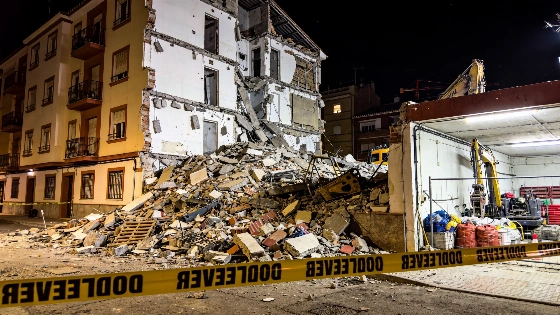
Barcelona’s Sant Gervasi district is beginning a cautious return to normal after the recent collapse linked to L9 metro construction forced the evacuation of eight residential buildings. The Generalitat has now authorised residents of two of the furthest properties—numbers 56 and 58 on Sant Gervasi de Cassoles—to return home from Monday, affecting 15 out of the 93 evacuated flats. However, most families remain displaced as technical teams continue to monitor ground stability and inject cement to secure the area.
The incident, which occurred 11 days ago, impacted around 300 people and led to the temporary closure of 92 flats. The city council has provided hotel accommodation for 67 residents near their homes. In addition to the residential impact, 10 ground-floor businesses, including clinics and offices, have also been affected by the evacuation. The sinkhole emerged after underground movements were detected at a depth of 40 metres, where the tunnel boring machine was operating. The affected area includes the courtyard behind the well-known pizzeria Verona, highlighting the disruption to both daily life and local commerce.
Authorities have confirmed that the buildings analysed so far show no structural damage. However, residents of number 54 on Sant Gervasi de Cassoles must wait at least another week, as sensors—initially refused by the building—have only just been installed and require further monitoring. The return of those living closest to the collapse is not expected before September, as safety remains the top priority. The tunnel boring machine remains halted while the situation is stabilised.
The evacuated buildings include numbers 2, 4, and 6 on Rubinstein, 3 and 5 on Teodora Lamadrid, and 54, 56, and 58 on Sant Gervasi de Cassoles. According to the Generalitat’s Minister of Territory, Sílvia Paneque, preliminary findings suggest the collapse was caused by insufficient concrete filling a cavity created by the tunnel boring machine. While such cavities are typically stabilised with injected concrete, in this case, the void reached the surface, resulting in the sinkhole. Paneque emphasised that the construction method has been used for 43 kilometres of the L9 line, with only one kilometre remaining, and ruled out any change to the tunnel’s route. Each building is being individually assessed to prevent further incidents as work resumes.
Emergency crews responded immediately after the collapse, with concrete poured into the hole for hours into the night. The area was secured by firefighters, local police, and geologists, while dozens of sensors were installed to monitor ground movement. The affected zone has a history of subsidence, including a fatal collapse in 1962 and a pavement upheaval earlier this year in front of the Mercedarias convent. The complexity of Barcelona’s underground—where the tunnel transitions from granite to slate—adds to the engineering challenges.
Urban infrastructure failures have prompted significant responses in other Spanish cities as well. For example, Valencia authorities recently launched a major housing and infrastructure plan following severe flooding in La Torre, aiming to rebuild and improve safety standards for affected residents. Details of this initiative can be found in the report on Valencia’s post-flood reconstruction efforts.
The L9 metro project is one of Barcelona’s most ambitious transport undertakings, designed to connect outlying districts and improve mobility across the city. While the majority of the line has been completed without major incident, the recent collapse underscores the risks inherent in large-scale tunnelling beneath densely populated urban areas. Ongoing monitoring and phased returns are expected to continue until all buildings are declared safe, with authorities maintaining a cautious approach to ensure resident safety and prevent further disruption.