Paula Badosa relies on Begur, a Costa Brava village, to recover from the pressures of the tennis circuit. The town offers her a rare escape from global attention and a vital source of mental strength.
Paula Badosa, one of Spain’s most prominent tennis players, has turned to Begur on the Costa Brava as her essential retreat from the relentless pace of international competition. While her career is marked by constant travel and the intensity of the WTA circuit, it is this Catalan village that provides the stability she needs to maintain her mental and emotional health.
Begur, located far from the world’s tennis capitals, has become more than just a holiday destination for Badosa. Raised in its narrow streets despite being born in New York, she credits the town’s tranquil beaches and pine forests for helping her recover from the physical and psychological toll of the sport. The contrast between the global spotlight and the anonymity she enjoys in Begur is stark—here, she is not the Indian Wells champion, but simply a local among family and lifelong friends.
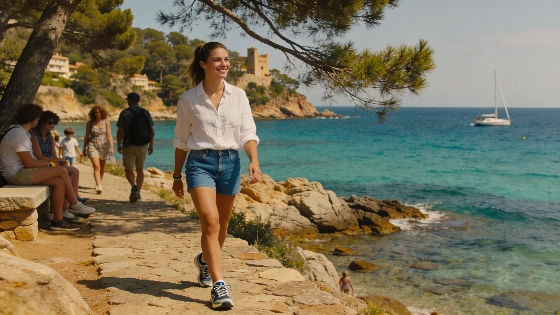
In Begur, Badosa’s routine shifts dramatically. The strict dietary regimens and protein shakes of the professional circuit are replaced by local dishes such as rice casseroles and fresh fish. This connection to local food and tradition is seen by sports psychologists as a “safe environment,” a crucial factor in her ability to overcome injuries and setbacks. The physical landscape of the Costa Brava, with its rocky coves and clear waters, offers a therapeutic counterpoint to the hard courts and constant pressure of international tournaments.
The growing popularity of Begur is not coincidental. Badosa’s recent social media posts from the region have drawn attention to the area’s unique blend of exclusivity and discretion. Tourists are increasingly seeking out the same peace that attracts celebrities like her, hoping to blend in among residents who know her simply as “the daughter of Mireia and Josep.” For many, walking the Camí de Ronda, a coastal path Badosa often uses for training and relaxation, has become a must-do experience.
Begur’s reputation has risen further after being named one of Spain’s most beautiful villages by several travel publications. This recognition has shifted its status from a well-kept secret to a sought-after destination, reinforcing its role as a sanctuary for those seeking respite from public scrutiny.
As Badosa faces a demanding season and ongoing physical challenges, Begur remains her emotional headquarters. Medical teams monitor her recovery, but it is the familiar environment of the Costa Brava that allows her to recharge. Observers note that her resilience on court is often forged in the quiet moments spent among Begur’s medieval castles and secluded beaches.
The importance of such personal refuges is echoed in other areas of Spanish life. For example, the need for safe spaces and community support was highlighted during recent events in Barcelona, where residents were evacuated after a large sinkhole disrupted daily routines. Details of that incident can be found in this report: Emergency response to a major sinkhole in Barcelona’s Putxet district.
Begur’s role in Badosa’s career underscores a broader trend: the search for balance between public achievement and private well-being. The town’s rise as a destination reflects not only its natural beauty but also its capacity to offer a sense of normalcy and belonging, even to those in the global spotlight. For Badosa, the peace she finds in Begur may well be the key to her continued success on and off the court.
Begur is situated in the province of Girona, within Catalonia, and is known for its historic center, scenic coastline, and protected natural areas. The Costa Brava region attracts both domestic and international visitors, especially during the summer months. The Camí de Ronda, mentioned in connection with Badosa’s routines, is a network of coastal paths originally used by fishermen and now popular among hikers and tourists. The area’s culinary traditions, based on fresh seafood and local produce, are a significant draw for visitors seeking authentic Catalan experiences. As tourism in the region grows, local authorities continue to balance development with the preservation of Begur’s unique character and environment.