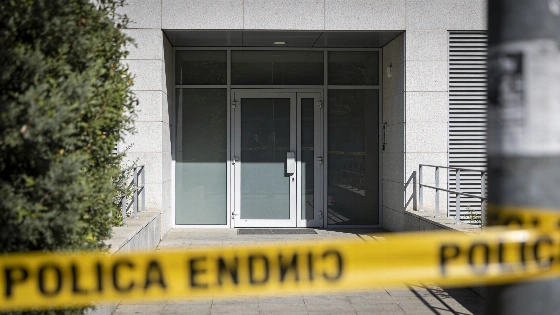
A confrontation with a visiting crew outside his home in Benicalap on 20 October 2026 left a television microphone and a journalist’s mobile phone smashed. Sources cited by elDiario.es said police detained Pedro Cuevas the following day, aged 55, and took him to the Tránsitos district station on suspicion of causing property damage.
The Equipo de Investigación reporter and camera operator had gone to the property to interview Cuevas. He chased the camera operator before confronting the journalist, according to the sources. Neighbours witnessed the incident. Police attended but did not find him; officers arrested him the next day. The reported arrest was on suspicion of property damage.
The crew was preparing a documentary about the 1993 killing of Guillem Agulló. On 17 November 2026, Spain’s Council of Ministers approved Agulló’s posthumous recognition as a victim of terrorism, 33 years after his death. The award was the Grand Cross of the Royal Order of Civil Recognition to Victims of Terrorism, provided for under Law 29/2011. The recognition followed a request from Agulló’s family. The Government said the killing had a political and ideological motive. The recognition is a state honour, not a retrial or a change to the original sentence. The decision is also covered in earlier reporting. Cuevas served four years in prison for the killing, which took place in Montanejos (Castelló) on 11 April 1993, when Agulló was 18.
The Audiencia Provincial de Castelló described the killing as a fight between young men with no ideological component. The Government’s later decision attributed a political and ideological motive to the crime. Agulló was a young anti-fascist and independentist militant in the Maulets and Sharp collectives. The Valencian far right repeatedly celebrated his death with graffiti and chants of “Guillem, jódete”, while his family received numerous threats.
Cuevas also stood on the electoral lists of the neo-Nazi party Alianza Nacional in 2007. Two years earlier, he was detained during Operación Panzer, a Guardia Civil investigation into a neo-Nazi organisation. Officers found homemade knuckle-dusters at his home. Cuevas had made them himself.
Intercepted calls cited in the case file included Cuevas boasting of taking part in hunts targeting people he called “moros” and “guarros”. All those implicated in the investigation were later exonerated after the Tribunal Supremo annulled the police recordings that had prompted it. The source account says Cuevas’s membership of the most radical far-right groups was confirmed.
Agulló became a symbol of Valencia’s anti-fascist movement. Each year, events in his birthplace of Burjassot commemorate him and denounce the rise of the far right.