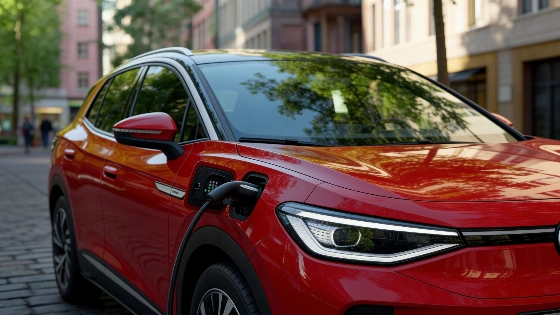
A new European study finds plug-in hybrid vehicles emit six times more CO2 than manufacturers report. The gap between lab results and real driving is now impossible to ignore, raising questions about the future of these cars in Spain and across Europe.
Plug-in hybrid vehicles, often promoted as a cleaner alternative, are turning out to be much more polluting than their official numbers suggest. According to Transport & Environment, the average plug-in hybrid on European roads emits 145 grams of CO2 per kilometer—six times higher than the 24 grams per kilometer claimed in lab tests. This figure comes from a large-scale analysis of real-world driving data from vehicles registered in 2024, and it highlights just how far lab results are from what actually happens on the road.
This news comes at a difficult time for the auto industry. For years, manufacturers have pitched PHEVs as a bridge between combustion and electric cars, advertising ultra-low emissions and fuel consumption that now look unrealistic. The latest analysis, based on real-world monitoring of 220,000 vehicles registered in 2024, makes it clear: the environmental benefits of these hybrids have been overstated. The International Council on Clean Transportation (ICCT) reports that the gap between official and real emissions has grown since 2021, with real-world CO2 output now 4.6 times higher than type-approval values for 2023 models.
Earlier European onboard monitoring data showed that in 2021, real PHEV emissions were about 3.5 times higher than official figures, and this gap has only grown since then.
Transport & Environment’s findings, using data from the European Environment Agency, show that the gap between official and actual emissions has only widened since the EU began collecting real-world figures in 2021. In 2023, PHEVs averaged 138 grams of CO2 per kilometer in daily use, compared to just 28 grams in official tests. Over the past year, real emissions rose by 5 percent while the official numbers dropped by 15 percent. This split exposes the limits of current testing protocols. OBFCM (On-Board Fuel Consumption Monitoring) data backs up these results, giving a more accurate picture of how these vehicles perform outside the lab.
The main issue is how these cars are actually used. While PHEVs can run on electricity for short trips, their real emissions depend on how often drivers recharge the battery and how much they rely on the combustion engine. In practice, most owners do not plug in as often as test cycles assume, so fuel consumption and pollution end up close to those of regular cars. Recent ICCT analysis points out that infrequent charging means the combustion engine runs more, leading to much higher CO2 emissions than lab tests predict.
For comparison, the 145 grams of CO2 per kilometer recorded for PHEVs is only 14 percent lower than the average for standard combustion vehicles, which stands at 169 grams. A year ago, the gap was 17 percent. The supposed environmental advantage of plug-in hybrids is shrinking fast.
Recent studies based on OBFCM data have analyzed hundreds of thousands of PHEVs, with one ICCT report covering nearly 920,000 vehicles, making these findings among the most robust in the field. The narrowing emissions gap with conventional cars further undermines the case for PHEVs as a meaningful climate solution.
ICCT
Despite these findings, PHEVs remain popular in Europe. They made up 9.8 percent of all new car sales in the EU during the first half of 2026, and 10.8 percent in Spain. The future of this technology now depends on regulatory decisions in Brussels. The EU’s upcoming Euro 6e-bis standard would require manufacturers to publish more realistic emissions and consumption figures, a move strongly opposed by the auto industry’s lobby group ACEA, which wants to delay or block the changes planned for 2027.
Isabell Büschel, director of Transport & Environment in Spain, was blunt: “Plug-in hybrids are one of the biggest greenwashing maneuvers in the automotive industry. They are sold as an ecological solution, but in practice they have a serious environmental impact. They are also a real scam for consumers, who end up paying much more for fuel than they expected.”
Manufacturers, meanwhile, are lobbying the EU to keep the current rules, hoping to postpone full investment in electric vehicles. The stakes are high: as China pushes further into the European EV market, any regulatory delay could leave European brands behind.
Spain’s embrace of plug-in hybrids follows a wider European trend, but urban drivers in the country are already noticing higher fuel bills than promised. The gap between official data and daily experience is now too large to ignore. As reported earlier, some countries are already giving fully electric vehicles regulatory perks, leaving hybrids in a grey area.
The evidence is now clear: plug-in hybrids are not the climate solution they were marketed as. The EU’s move to tighten testing standards is overdue, and any attempt to weaken these reforms would benefit manufacturers at the expense of both consumers and the environment. The era of easy green marketing for PHEVs is ending. What comes next is a reckoning for an industry that has often put image ahead of impact.