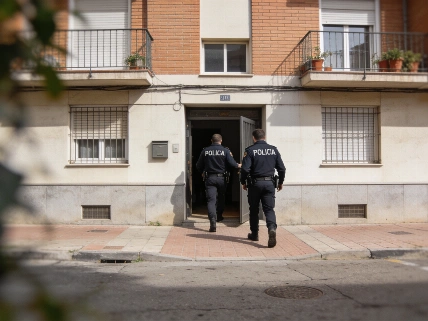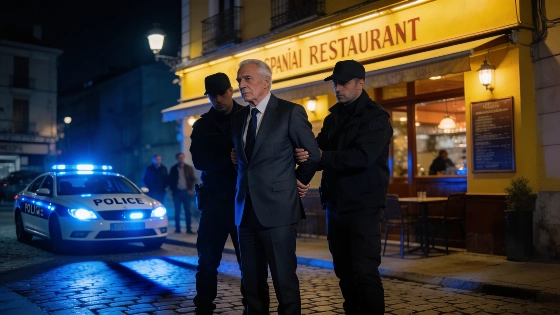
Domenico Paviglianiti, described as one of the most influential leaders of the Calabrian mafia, was arrested by Spain’s National Police in Soria last Friday. First reported by El Diario de Valladolid, the arrest took place as he left a local restaurant. Investigators had monitored the area for weeks, suspecting that Paviglianiti was hiding in the city while wanted by Italian authorities.
The operation paired Spain’s UDYCO Central, the National Police unit responsible for drug and organized-crime investigations, with Italy’s Guardia di Finanza in Reggio Calabria, which has financial-police responsibilities. Soria Provincial Police officers also took part. Investigators focused on a residence in Soria before detaining Paviglianiti; the arrest was made public on Sunday.
Paviglianiti was arrested in Madrid in 2021, aged 60. His earlier detention came in 1996, in a police operation that also led to the arrest of 16 other alleged members of his organization. He was subsequently extradited to Italy to serve a 30-year sentence for a separate crime. Spain’s Constitutional Court later annulled that extradition, leading to his release.
Italian authorities also investigated an alleged attempt by members of Paviglianiti’s clan to bribe Spanish judicial officials in connection with the extradition proceedings. The reported sum was 70 million pesetas. At Spain’s fixed conversion rate of 166.386 pesetas to one euro, that amounts to about €420,700; the alleged effort reportedly failed.
Police statements in 2021 described Paviglianiti as a leading figure in Calabria’s organized crime, with drug and arms trafficking among the activities attributed to him. Italian authorities have described him as one of the country’s three most-wanted organized-crime figures and linked him to the orchestration of nearly 130 murders. These are allegations attributed to law-enforcement authorities. Paviglianiti is associated with the ’Ndrangheta, the mafia originating in Calabria.
The Soria arrest highlights cross-border police cooperation in cases involving suspected organized-crime figures. Spanish and Italian investigators coordinated the operation, with Soria police officers also involved, after surveillance of a suspected residence. Such cooperation matters in investigations involving alleged criminal activity and wanted suspects across national borders.
Spain has also seen other police operations targeting suspected criminal networks. In Barcelona province, authorities uncovered unauthorized dental clinics and detained several suspects. Details of that investigation can be found in this report on recent police actions against criminal networks in Catalonia.
The ’Ndrangheta is among Europe’s most powerful criminal organizations and is associated with international drug trafficking. Spain’s role as a transit country for illicit goods has made it a setting for high-profile arrests. The pursuit of figures such as Paviglianiti shows the importance of cooperation between national law-enforcement agencies in tackling organized crime across Europe.